AC motor dryers and high-speed brushless dryers give a salon supplier two formats to consider. The buyer may be filling an existing catalog position or preparing an additional line. Keep those purposes with the sample request. They provide a point of comparison when the buying team reviews the candidates.
The practical outcome of an AC vs brushless hair dryer comparison is a shortlist for the intended customer. A conventional AC candidate may meet the brief on its own. A brushless candidate may fill the proposed high-speed role, or the range may have room for both. Review the complete dryers and the quotations for the versions intended for sale before deciding which offer to take forward.
Start With the Range the Customer Will Buy
A replacement order gives the buyer something specific to work from. The previous item occupied a place in the catalog and had customers who knew what it did. An additional line has to earn a separate place. When reviewing the Oucai hair dryer range, it helps to write that role beside the sample request, where the next person reviewing the model can see it.
Motor descriptions can be confusing at first. AC is short for alternating current. BLDC means brushless direct current; an electronic controller switches the motor’s winding currents, so brushes are not needed for that process. Keep the description on the motor line of the specification. A corded brushless dryer still has an appliance rating, and purchasing needs its voltage and frequency recorded separately for the intended market.
The sample request might concern a dryer for ordinary salon brush work, for example, or an addition sold specifically as a high-speed format. Either is a usable starting point. Without one, reviewers can like different features and still leave purchasing unable to decide between the samples.
AC Motor Hair Dryers for a Conventional Salon Offer
For wholesale buyers considering an AC motor hair dryer, the ordinary movements of a blow-dry are worth watching. At the sample table, changing settings is straightforward. During brush work, the review becomes more demanding: the dryer is being moved and the other hand is occupied. Give the reviewer time to use it in that position.
For Oucai’s U-8276 AC motor hair dryer, enter 1700W in the comparison and allow time to try its two speed settings and three heat settings. The reviewer need not use every adjustment for every task. Note the ones selected during the proposed salon work, then ask about the choices.
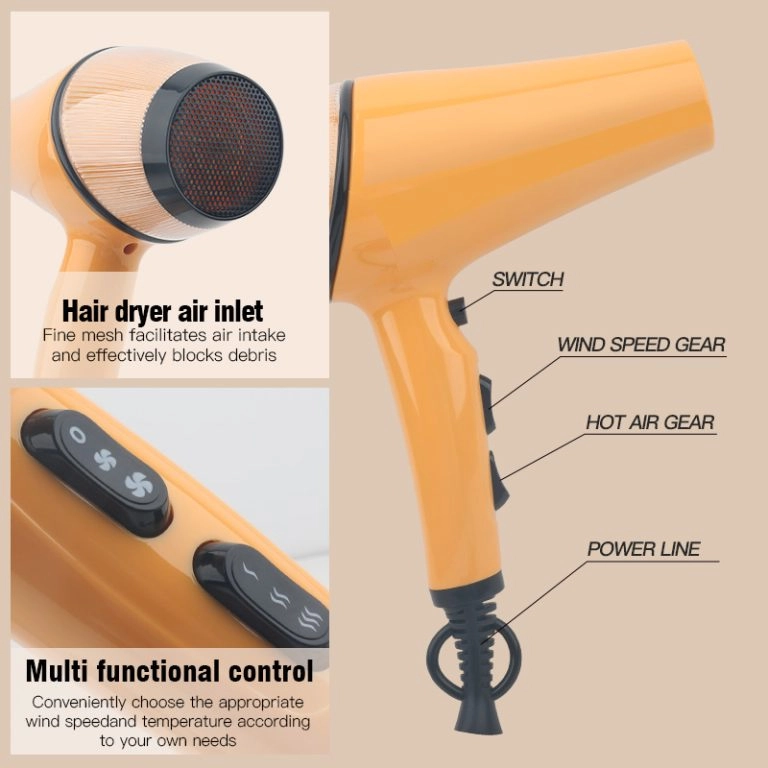
Preferences deserve a little explanation. A grip comment may concern the shape of the handle or the position needed to reach a control. Those are different observations. Keep the proposed attachment on the sample during the relevant work, so its fit and handling are considered before the accessory set is settled.
Brushless Hair Dryers for a High-Speed Product Line
A brushless candidate brings a different format into the discussion. For a wholesaler already selling conventional salon dryers, the next step is to establish what the additional model does for the catalog. A high-speed format might be the purpose of the new line. Its controls still have to work for the customer buying it.
For a U-8216 sample from Oucai, name the 120V/60Hz configuration for a US project. The model also has a 230V/50Hz alternative. The dryer uses a 110,000 RPM brushless motor, with two airflow settings and cold, warm and hot modes. Include those adjustments in the styling review. The chosen electrical version stays with the model number, giving the sample reviewer and purchasing contact a specific configuration to discuss.
The buyer can record motor RPM and still need a separate answer about drying time. A timed task involves the assembled dryer and its chosen attachment, with air traveling from the fan through to the hair. Keep a note of the setting used for initial drying and the one chosen during brush work.
Those notes can accompany the U-8216 brushless hair dryer into the sales discussion. They explain which adjustments were used and for what work. If the proposed packaging will carry a timed comparison, agree the basis for it and retain the relevant evidence. The sample notes and any numerical claim then have their own clear purposes.

AC vs Brushless Hair Dryer Comparison for Bulk Orders
Set aside the motor labels for the practical comparison. The review now concerns two appliances and the job specified at the start, with a few consistent observations to take into the purchasing meeting.
Drying Control and Handling
Decide what the sample session will cover before either dryer is used. The two trials need comparable hair sections or test material, with similar starting moisture and an agreed finish. Record the settings and attachment. Keep within each model’s operating instructions, including any limits on use; the comparison does not require both dryers to be run at their maximum setting.
Observe where adjustments become necessary. Does the reviewer reduce airflow for controlled brush work? Are the switches easy to reach? Can the chosen attachment be handled as intended? These observations give a sales team a practical explanation of the product without turning a motor specification into a performance guarantee.
| Selection point | U-8276 AC model | U-8216 brushless model | Buying implication |
| Motor | AC motor | 110,000 RPM brushless motor | Choose the format, then assess the complete dryer for the job. |
| Airflow controls | Two speed settings | Two airflow settings | Equal setting counts do not establish equal airflow. Compare their use. |
| Temperature controls | Three heat settings | Cold, warm and hot modes | Review the actual adjustments required for the intended styling work. |
| Power | 1700W | 1400W/1600W options | Match the quoted power to the selected electrical version before comparison. |
For the handling entry, weigh the complete dryer being held in the trial. Label that measurement clearly. It belongs with the reviewer’s grip and balance comments, while packed weight belongs with carton planning. Add the session length to the record so another reader can see what the observations cover.
Quotation and Margin Comparison
Read the quotation as a list of items being purchased. Is the proposed attachment included? Is the printed manual included? The two totals are comparable only after the contents, order quantity and delivery basis agree. Keep later packaging or branding revisions visible, with the updated amount attached to the relevant change.
In a salon hair dryer wholesale purchase, compare the planned sales descriptions as well as the costs. One may concern a conventional salon format and the other a high-speed addition. Purchasing needs that distinction before judging the proposed selling prices. The motor category alone gives no fixed margin to insert into the calculation.
The selected version can move into Oucai’s pre-production sampling and final inspection process. There is a sample before mass production and final inspection before shipment. Keep the model and accessory record with the order. Refer to that selection when agreeing the inspection scope, so the configuration being purchased remains identifiable.
Build a Focused Wholesale Assortment
Two accepted samples do not have to become two launch items. There is still the question of which catalog position each will occupy. Put the proposed descriptions beside the original brief. If the distinction disappears when the motor names are removed, consider whether the range needs both models immediately.
The replacement-and-addition example gives the review two separate outcomes. One model is being considered for an existing catalog position; the other is being considered for a new high-speed line. Purchasing can accept either, both or neither after reviewing the offers. Quantities remain to be settled with the supplier against that launch plan.
An OEM salon hair dryer inquiry does not need a long specification copied from a catalog. It needs the shortlisted model, destination, quantities and requested changes. Include the required electrical version in the brushless hair dryer supplier discussion, together with the applicable market documents to be confirmed. Pricing, order minimums and timing can then be discussed for that particular offer.
Conclusion
The buying team can now return to its brief with the AC and brushless hair dryers that remain under consideration. Read each quote beside the sample notes. For the replacement, check that the required work has been covered. For an addition, check the intended catalog position. Any unresolved point can go into the supplier discussion before a quantity is committed.
A shortlist is also enough to begin the supplier conversation. Include the sales channel and destination when preparing to discuss an AC and brushless hair dryer order with Oucai. Add estimated quantities, the required version and accessories, plus any branding changes under consideration. Questions left open during selection can be included in that request, ready for the next sample or quotation discussion.
Frequently Asked Questions
Does a brushless hair dryer need a higher wattage?
Not necessarily. In this comparison, the AC model U-8276 is 1700W and U-8216 brushless options are 1400W/1600W. The selected version needs its own confirmed rating. Use the sample review to assess the drying task, keeping that result separate from electrical input power.
Should a first wholesale range contain both motor formats?
The two models can be reviewed before making that commitment. Give each proposed item a place in the catalog and a customer it is meant to serve. If one already covers the intended offer, a single-model launch remains an option. Discuss minimum quantities for the selected models with the supplier.
Which U-8216 version should a US buyer request?
Request 120V/60Hz and keep that requirement with the U-8216 model number. The label and operating instructions need to match the ordered version. Also confirm the proposed plug and applicable market documents for that configuration. The 230V/50Hz alternative is a separate version to identify during sourcing.