A bulk order for an OEM ionic hair dryer depends on agreement about the U.S. electrical build, the claims planned for retail and the sample that represents production. A good handling trial only settles part of the purchase. A sample can feel right at a salon station while the proposed cord assembly or an anti-frizz claim still needs review.
A sample request for a private label ionic hair dryer starts with the sales destination, intended channel and proposed contents of the box. Packaging copy and online listings belong in the same conversation. If the product team wants a diffuser and the supplier has priced only a concentrator, the difference is easier to settle before the sample is made.
Specify the U.S. Electrical Version First
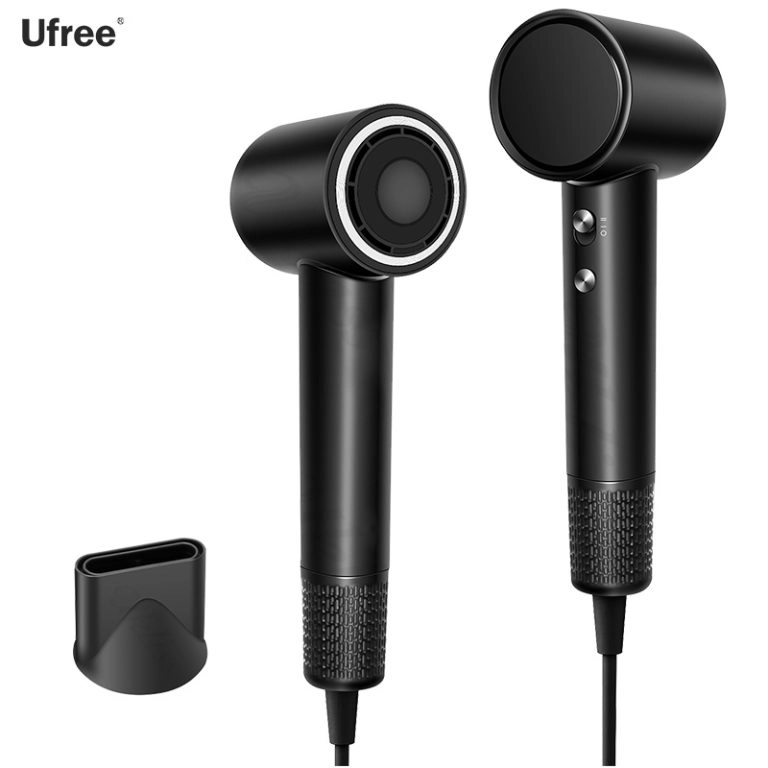
The Oucai U-8216 high-speed ionic hair dryer gives buyers a model reference for an ionic dryer. Its listed electrical options include 120 V at 60 Hz and 230 V at 50 Hz. For a U.S. order, the quote needs the destination rating and proposed plug and cord assembly. The sample label and assembly can then be checked against that quote, even where both electrical versions carry the same model number.
The supplier should identify the proposed rating label, plug and cord assembly and provide the relevant documents for the quoted version. Under U.S. rules, a covered hand-supported hair dryer lacking compliant integral immersion protection is treated as a substantial product hazard. The person responsible for product compliance can use the CPSC guidance for hand-supported hair dryers to check the scope and review evidence for the final build before release.
The sample inspection can establish whether the installed plug and cord match the written configuration. Verification of the protective function belongs with qualified personnel. The approval record should identify the person who checked the evidence and the configuration covered by that review.
Decide Which Ionic Claims Can Go on the Box
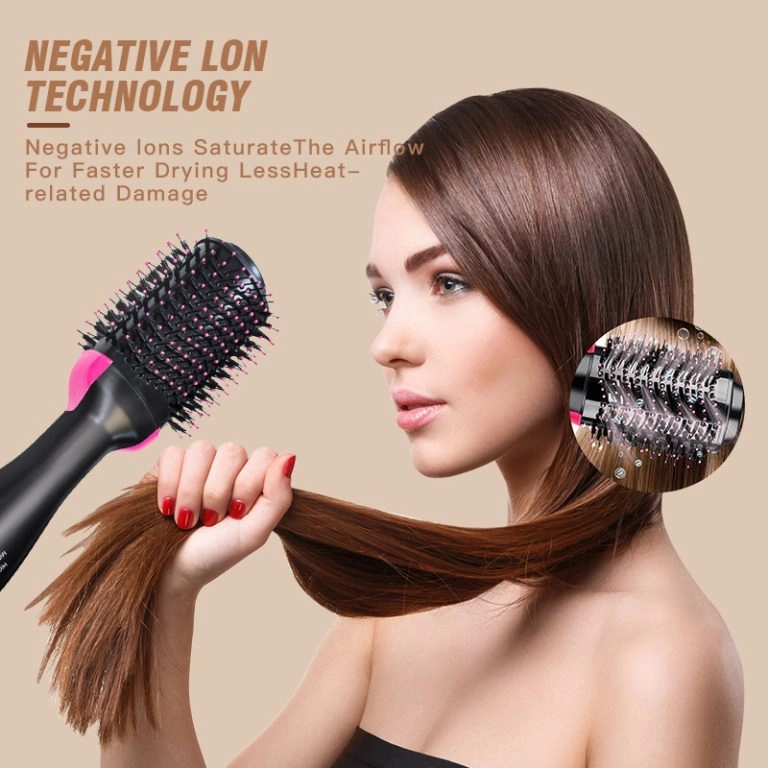
The wording on the box determines the proof needed. An ionic function is a feature claim. A number on the box describes output, while a promise of less frizz describes a result on hair. An ion reading can support a measured output claim under the conditions recorded in the report. A comparative styling claim needs evidence of the styling outcome and a clearly identified comparison.
Compare Ion Output Under the Same Conditions
A numerical claim is easier to assess when the ionic hair dryer supplier identifies the unit of measure, the distance from the outlet, the setting, the attachment and the sample tested. The report should also explain whether the figure is a peak or an average. When suppliers use different methods, purchasing can ask for a comparable reading before treating either figure as a selection criterion.
Approve the Wording for Retail
The retail team can keep one approved set of claims for the box, the product listing and the sales materials. A short styling video also needs review if the caption or a side-by-side demonstration implies a measurable result. FTC advertising substantiation guidance calls for a reasonable basis for objective claims before an ad runs. If the evidence covers only ionic output, any promise about frizz stays open for a separate decision.
Approve the Sample and Its Written Specification
A demo unit is useful for judging weight in the hand, control placement and attachment handling. Approval requires a sample tied to a written build and contents list. The sample identifier and specification revision give purchasing and production the same reference. Provisional parts or artwork can stay on the record with a named approver and a due date rather than passing into the order by default.
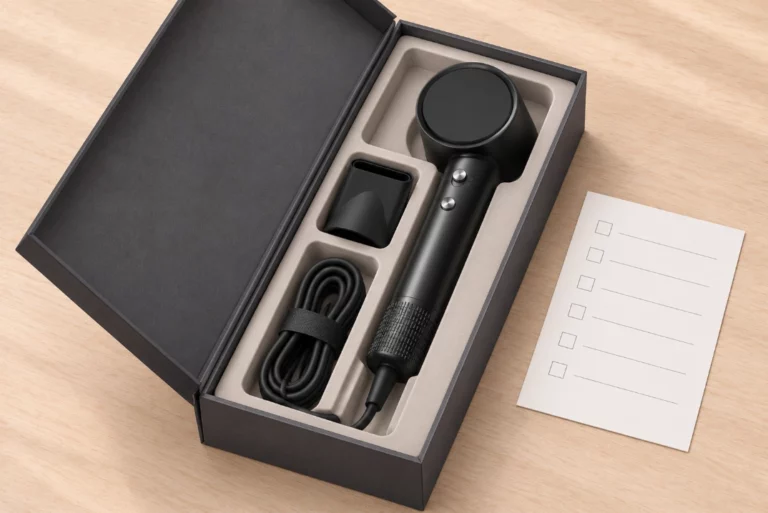
Oucai’s pre-production sample and inspection process gives the buying team a point to agree the production configuration and a later point to check the finished shipment. The U-8216 magnetic nozzle is one item that benefits from being named on the contents list. Its fit can be checked during sample approval, and its inclusion can be verified against the signed pack specification during final inspection.
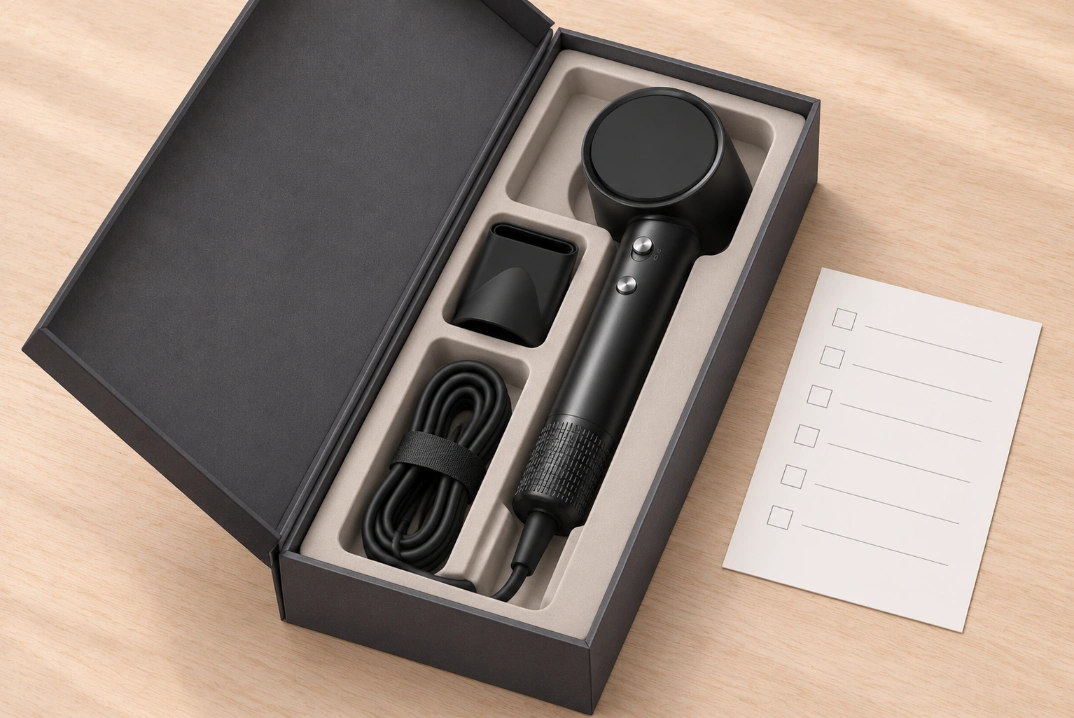
Product development may clear the handling trial before compliance has reviewed the electrical file or the retail team has approved the listing. Each decision can be entered under the same sample identifier. The buyer then has a dated record of which decisions are complete and which items still prevent the order from moving ahead.
Keep the Approval Record With the Order
The written approval file brings together the following records.
- Model and electrical version, with the rating label and plug and cord identifiers.
- Approved sample reference and the agreed functions, attachments and pack contents.
- Exact retail claims and the evidence accepted for each objective statement.
- Exceptions, approval owners and the date each open issue must be resolved.
Decide What Changes Require Another Review
The review depends on what changed. A revised leaflet may need only a copy check when it still describes the same build. A new cord assembly warrants another review of the electrical configuration and supporting evidence. If a different nozzle changes the conditions shown in a styling demonstration, the product team can check whether the original evidence still covers that demonstration.
A different platform needs a new model decision before the artwork is finalized. Oucai’s hair dryer range can help the buyer identify another candidate for a separate quote and sample. Keeping the original approval in the order file makes it easier to see which dimensions, components or claims must be reviewed again when the model changes.
Agree What the Final Inspection Can Verify
The inspection scope belongs with the bulk quote. Agreed labels, accessories, visible configuration and defined operating checks can be compared with the approved sample. If the buyer requires a measured ion output, the method, sample selection and testing responsibility should be agreed separately. The order file can record which reports must be available before shipment authorization.
The purchase order should identify the approved specification, sample and artwork revisions. A proposed substitution can then be raised before production with the affected part, model and order quantity. That gives purchasing a basis for deciding whether a document update is enough or whether another sample or review is needed.
Conclusion
The order can move ahead once the destination build, retail wording and approved sample describe the same dryer. The signed sample record gives inspection a reference, and the claim record gives the listing team wording it can use. When either record is incomplete, a named owner and a decision date make it clear what still needs to be resolved.
An OEM ionic hair dryer sample inquiry to Oucai can cover the preferred model, electrical version, intended attachments, U.S. sales channel, launch window and estimated first-order quantity. Including the planned retail claims makes the evidence request specific. The supplier can respond with the configuration available for sampling and its estimated sample cost and timing.
FAQ
Can a sample for another voltage be used to approve the U.S. version?
An overseas version can help with decisions such as grip or control placement. Final approval calls for a sample of the destination build and a review of the electrical evidence for its actual model, rating and cord assembly. Both should be identified in the written approval.
Does an ion output report substantiate a claim about frizz?
An ion output report records a measurement. A claim about frizz needs evidence of that outcome under conditions that fit the proposed wording. The retail team can hold the claim until the evidence is reviewed, then record the wording approved for the package and listing.
Does a new retail box require another dryer sample?
A graphics revision can often be cleared through artwork approval when the build and box contents stay fixed and the text remains accurate. A change to the attachment, product protection in transit or printed claims calls for another review of the final packed sample and the affected evidence.