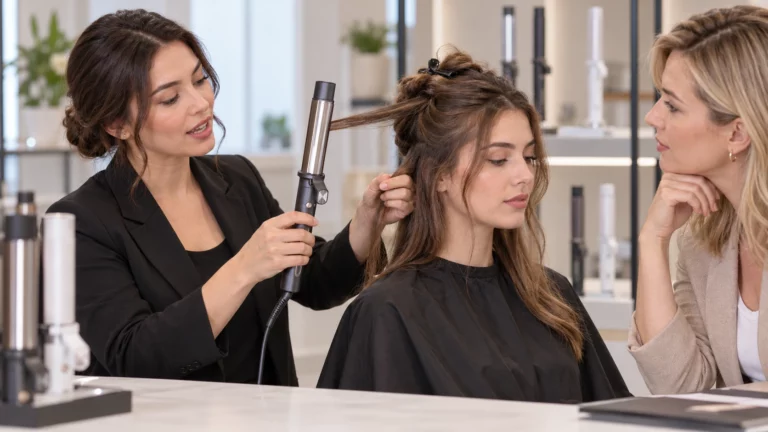
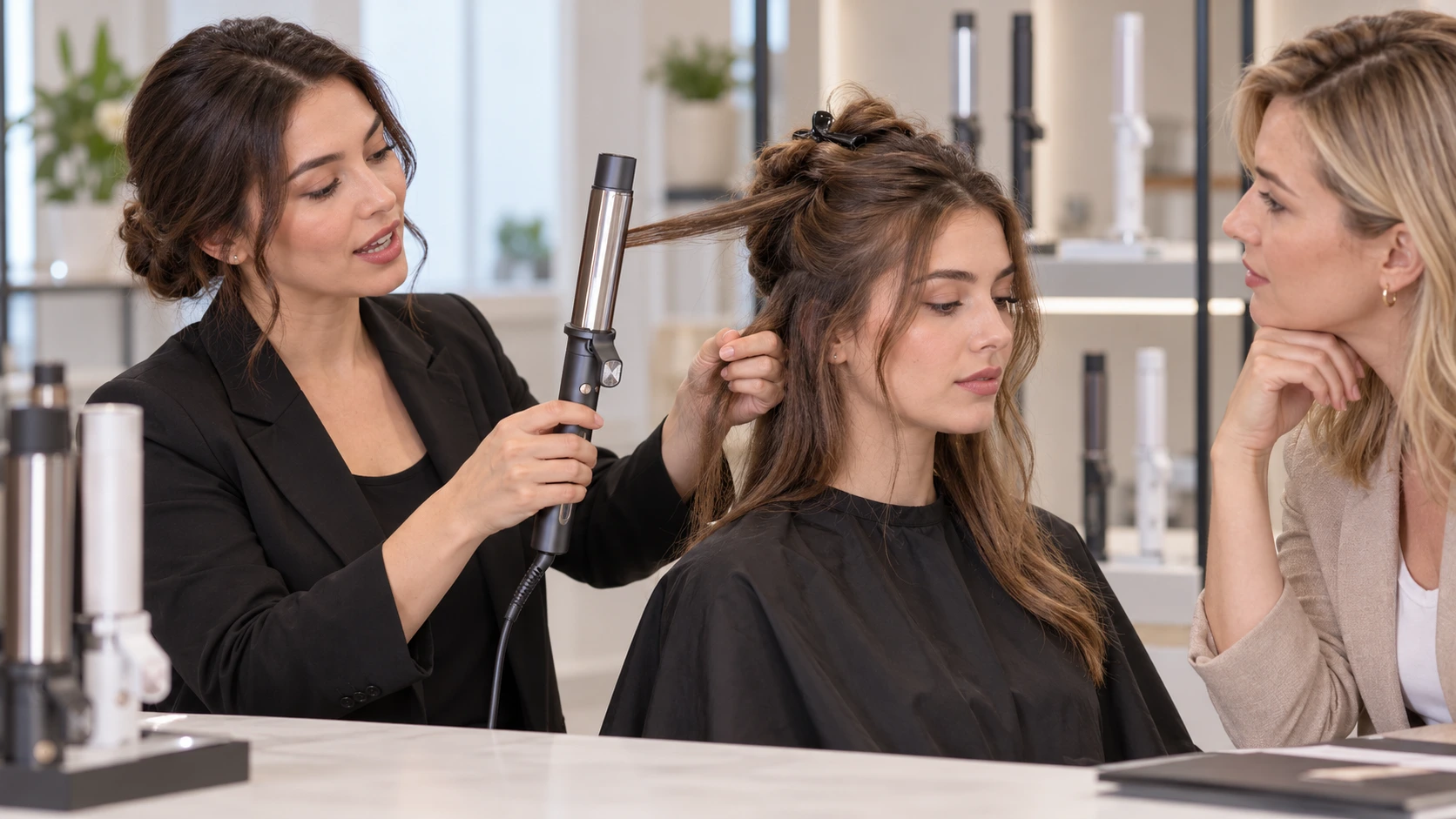
In automatic hair curler wholesale sourcing, a finished curl is one thing to approve; the steps needed to produce it are another. A retailer needs to see preparation, placement, the styling cycle and release on the proposed sample. With the instructions beside it, that demonstration becomes a basis for checking the retail offer, including the work still left to the customer.
For US importers and private-label brands, the sample also needs a defined electrical version and pack. Two quotations headed automatic curling iron may describe quite different purchases. Resolving the operating sequence first gives the buyer a model to evaluate, rather than a label to compare.
Choosing the Product Through Its Retail Demonstration
A retail promise gives the sample review a purpose. The intended customer might want help wrapping sections consistently, or a simpler way to create a particular curl. The brief should identify the intended hair lengths, user experience and result. Claims covering every hair type need more support than one selected demonstration can provide.
Within the Oucai curling tool range, the choice of an automatic format should follow that customer task. A photograph of the result cannot explain the loading method. Store staff need to be able to describe that method and the release step from the supplied instructions. The choice of format therefore affects the explanation that accompanies the sale, even where the finished curl looks much the same.
Consider a proposed one-touch description. If the model still requires sectioning, positioning and direction selection, those steps form part of its use. A demonstration that begins only when a button is pressed leaves them out. The buyer needs the earlier preparation included before judging whether that description explains the experience fairly.
Setting the Boundaries of the Demonstration
A demonstration record can be quite short, provided it identifies the conditions. Sample code, hair preparation and section size give the result context. Temperature or cycle settings, where applicable, should refer to the sample actually used. Operator familiarity belongs in the notes too: an experienced demonstrator and someone reading the instructions for the first time are different review conditions.
For a side-by-side purchasing review, five entries capture the sequence:
- Sample identity and the instructions used for the demonstration.
- Preparation, hair placement and controls selected before styling.
- Cycle completion and the hair-release method described in the instructions.
- Results from repeating the task under the same conditions, including any corrections.
- Points at which the proposed quick-start wording needs clarification.
The manual can be reviewed without asking anyone to operate an unfamiliar appliance. A colleague can read the draft and identify the pictured controls, preparation and release steps. A mismatch is a concrete revision item: perhaps the illustration uses a different button name, or the release step has been omitted. The supplier can address it before the manual is printed.
A routine demonstration should stay within the operating instructions. Protection features should be assessed through approved technical procedures rather than improvised tests by purchasing staff. Where such a feature forms part of the offer, qualified technical reviewers should confirm its behavior against the specific model instructions.
What Automatic Actually Means for the Selected Model
With a rotating hair curler wholesale offer, the mechanism needs a more precise explanation than the name provides. Which action starts rotation? How is direction chosen? The cycle ending and the instructed release method need to be explained as well. The answers determine both the customer explanation and the checks carried forward into sample approval.
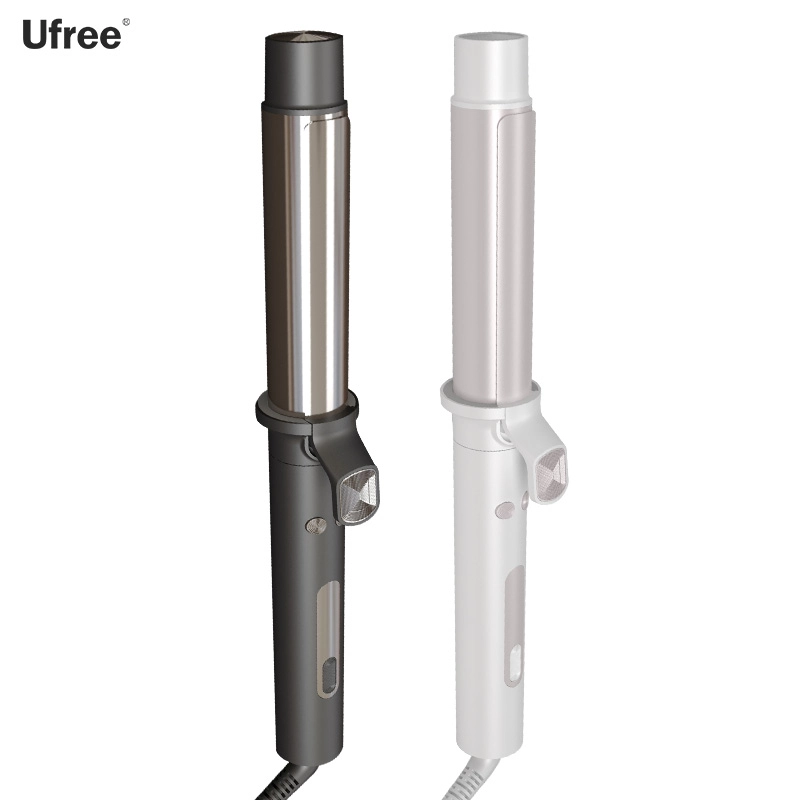
Oucai’s U-8238 automatic curling iron gives the project a definite model reference. That code belongs on the inquiry and demonstration record, followed by confirmation of the controls, electrical version and release instructions proposed for supply. Keeping these details attached to the U-8238 prevents an appealing feature seen on another automatic curler from slipping into the sample brief or retail artwork without confirmation.
A timed signal, a motor stop and an automatic release describe different behavior. Reverse operation is another feature requiring its own explanation. Anti-tangle wording should therefore prompt a specific discussion of what happens under the stated conditions. It cannot safely become an absolute promise that tangling will never occur.
A Demonstration Is Evidence Within Its Limits
US advertising needs truthful claims with supporting evidence, as explained in the FTC’s advertising guidance. For US retail planning, this has a practical consequence: timing one section does not establish total styling time. Preparation, repeated sections and corrections may sit outside the recorded clip. An experienced operator’s result also says little, by itself, about the learning required of a new user.
The US Configuration and Private Label Approval
The electrical version needs to be settled before final artwork. Rated input, plug, cord or charging arrangement, and control markings all describe the proposed product. Automatic does not mean cordless. A US plug option does not establish dual-voltage capability either. The responsible compliance reviewer should identify the evidence needed for the complete configuration under consideration.
The operating instructions must describe that same version. If retail material uses Fahrenheit and technical records use Celsius, the review needs the corresponding values, not two independently edited temperature lists. Controls need matching names and illustrations throughout. The proposed manual should be checked beside the sample, so a release instruction cannot accidentally refer to a button from a different version.
An artwork sheet can contain very different requests. A new logo is one matter; changing a control is another. Their effects on sampling, instructions and supporting documents need supplier confirmation. The broader curling iron wholesale checks provide context for shared electrical and packaging decisions; the automatic operating sequence remains a separate approval item.
The Cost of a Retail Offer, Rather Than an Appliance
An automatic hair curler supplier needs a defined pack to quote against. Accessories and printed materials need individual entries, along with the protective pack. Freight planning needs dimensions for that packed version, rather than dimensions of the appliance alone. Carton quantity belongs beside them, especially when different pack options are being compared. A product-only price leaves those purchasing questions open.
For a private label automatic hair curler, the commercial comparison should separate standard supply, artwork, custom packaging, sample revisions and any engineering work requested. MOQ and production timing belong to that particular combination. A schedule beginning at artwork acceptance differs from one beginning at sample approval. The starting point needs to be written beside the proposed production time.
For an automatic curler OEM inquiry, the request should describe the change itself. A request can include a color reference or proposed pack dimensions, for example. The supplier can respond to those details and identify any further sample or document approval needed. Until that response is agreed, the change remains a request, not part of the confirmed specification.
From Accepted Sample to Retail Support
A pre-production sample and final inspection before shipment form part of Oucai’s sampling and after-sales services. For the U-8238, the accepted control layout, labels, instructions and retail pack can be recorded for review at these stages. The checks themselves require agreement; the service commitment does not specify every test a retailer might request. Retained sample and document references help production and purchasing teams work to the same accepted version.
Oucai’s service offer includes technical guidance and repair or replacement support under the applicable terms. The launch agreement should name the warranty for the ordered product and the remedy for a manufacturing defect. It should also define the complaint information a retailer submits. These details give support staff an agreed basis for responding, without assuming a warranty period or remedy from another product’s arrangement.
Before a repeat order, retail feedback can be reviewed alongside the accepted sample. Retailers’ operating questions can reveal where demonstrations or instructions remain unclear. Pack shortages and listing mismatches need separate attention. A question about release may call for clearer instructions. A missing accessory calls for a pack check. These records answer different purchasing questions, so they are more useful when the reasons remain visible alongside the overall return count.
Conclusion
The strongest basis for an automatic hair curler wholesale decision is a demonstration tied to a specific model, set of instructions and proposed retail pack. It leaves fewer assumptions about preparation and release. The quotation, US configuration review and retail description can then refer to that same offer as it moves toward approval.
Buyers planning to request an automatic curler sourcing review can send Oucai the U-8238 reference, customer profile, market, quantity and proposed branding. Demonstration conditions and unresolved release questions help Oucai address the intended offer during the sampling and quotation discussion.
FAQ
Does an automatic hair curler have to be cordless
No. Automatic describes a styling action rather than its power source. The proposed model’s input and instructions establish the relevant electrical configuration. If a rechargeable version is proposed instead, its battery and charging arrangement need review in their own right. The corded sample’s approval cannot simply be transferred to it.
Does anti-tangle mean the tool automatically releases hair
The term alone does not establish that. A tool might stop without reversing, and reverse behavior does not explain every part of release. The relevant answer is in the explanation and instructions for the specific model. A protection claim should be supported through an appropriate review before it is repeated in a retail listing.
Can a supplier demonstration establish a fast-styling claim
It can support a claim only within the conditions demonstrated. If only the curling cycle was timed, preparation and the rest of the hairstyle remain outside the result. A broader speed claim needs evidence covering that broader task, with settings, section size and operator experience recorded.