Two offers can both say “low noise” and still leave a wholesale buyer unable to compare them. The missing information is usually the basis of the sound claim: the setting, the measurement and the conditions. In low noise hair dryer wholesale purchasing, get those details first, then review the samples while they perform the drying job intended for your customer.
The review has to survive a handover. Someone on the distribution team may be ordering the approved version without having attended the demonstration. Someone else will be writing the retail description. Give them the same configuration record and the basis for the claim, so neither has to fill in gaps from the words “low noise.”
Decide What the Customer Needs to Hear
Suppose the buying brief concerns an open-plan salon. Conversation with clients is part of the service, but drying still has to be completed at a useful setting. The finishing mode can be evaluated too. It simply cannot answer the whole brief if it is the only mode reviewed. Your sample notes need to distinguish the job assigned to each setting.
A retail brief adds another consideration. The customer reading the package will not hear the explanation that accompanied your demonstration. Try reading the proposed description on its own. If it seems to promise the same sound experience at every setting, establish whether the evidence really covers that promise before approving the wording.
Start with relevant formats in the Oucai hair dryer range. A few samples reviewed in a common setup give you a useful shortlist. A folder full of figures from different arrangements gives you more paperwork. Keep the intended service beside each candidate so the team can explain why it remains in the review.
Read the Noise Data Before Ranking the Offers
“dB” alone does not tell you enough. Does the figure concern sound pressure at a measurement position, or the sound power of the source? What weighting was used? The OSHA technical manual on noise explains those terms. Retain the supplier’s actual metric and notation, then ask for anything missing. An unexplained dB figure should not acquire an “A” when it is copied into your comparison.
Decibels also need a different reading from ordinary quantities. Moving up 3 dB doubles sound energy, as explained in a NIOSH noise evaluation report. Energy and perceived loudness are not the same thing, so that step cannot be called “twice as loud.” The buying implication is modest but useful: even a seemingly small difference deserves a comparison made on a common basis.
| Comparison field | What purchasing needs |
| Noise metric | Sound pressure or sound power, with weighting |
| Operating state | Airflow, heat setting and intended electrical version |
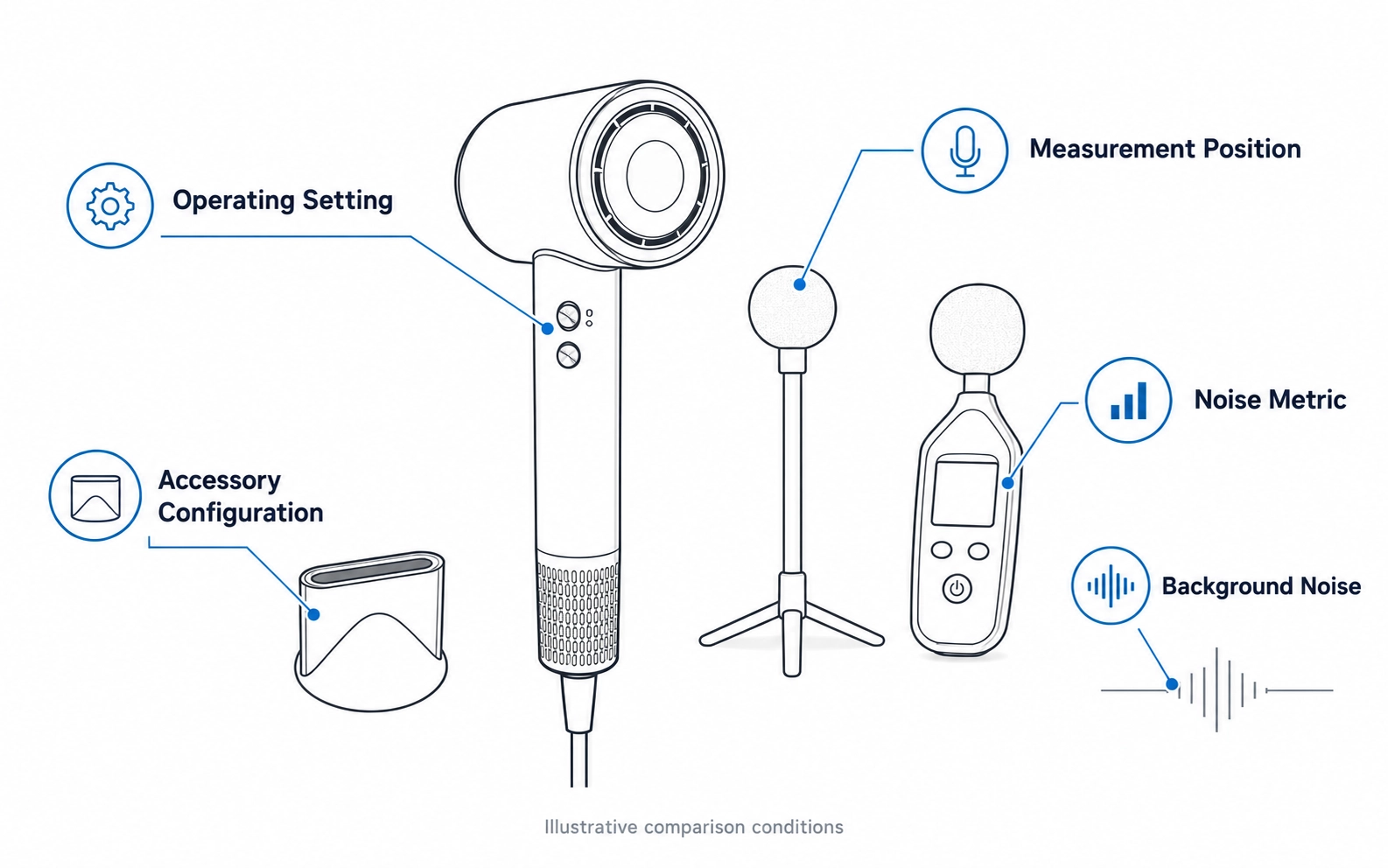
| Test arrangement | Position, room, background and instrument settings |
| Product configuration | Model, attachment and report or sample reference |
Imagine two rows in your quotation sheet. The first gives a result for a gentle mode; the second gives one for the working setting in the brief. Both numbers may be valid, yet the rows still do not compare the same job. Bring the settings onto a common basis. Check the positions and accessories too, before attributing the difference to the dryers.
The acoustic testing provider can help settle the method. One relevant reference is IEC 60704-2-9:2024, used with IEC 60704-1:2021 for mains-powered hand-held hairdryers within its scope. Have the provider identify the applicable route and declaration basis for the project. You need the ordered model’s report to complete that discussion; a reference to the standard in a quote is not the report. Keep electrical safety approval separate.
Agree the Sample Review While the Choice Is Still Open
Choose the comparison arrangement once, while the shortlist is still open. Candidate samples share the room, microphone position, instrument settings and operating sequence. Include the background-noise and calibration details in the notes. That way, the next reviewer can understand the result without guessing the setup. Where a numerical limit is contractual or advertised, settle the method with a competent acoustics provider.
Preparation includes the condition of the unit, not only the room. Keep to the model’s cleaning instructions and use its permitted accessories. The salon hair dryer maintenance guide is useful for planning that part of the review and the eventual handover. Put the applicable instructions with the configuration record, where the customer and review team can return to them.
A reviewer comment needs somewhere to go besides the decibel column. It may concern a whistle or uneven vibration rather than the overall level. Keep that observation next to the result. A recording helps colleagues hear what prompted it, but neither microphone processing nor playback is controlled well enough to prove an absolute decibel value with a phone recording.
Use the accessory and electrical version intended for the order. Choose the working settings for the brief and keep the trial within the operating instructions. If one reviewer needs a different sequence, update the comparison procedure rather than extending a single candidate’s run on the spot. The records need to say which results remain comparable.
Make the U-8216 Version Clear in the Request
For the Oucai request, identify the U-8216 high-speed hair dryer and settle the electrical choice first. The model lists 120V/60Hz and 230V/50Hz alternatives. Put the complete 120V/60Hz version into a US sample brief, with the accessories and market documents you need confirmed. Treat the 230V/50Hz option as another configuration; the list does not establish automatic switching between the two voltages.
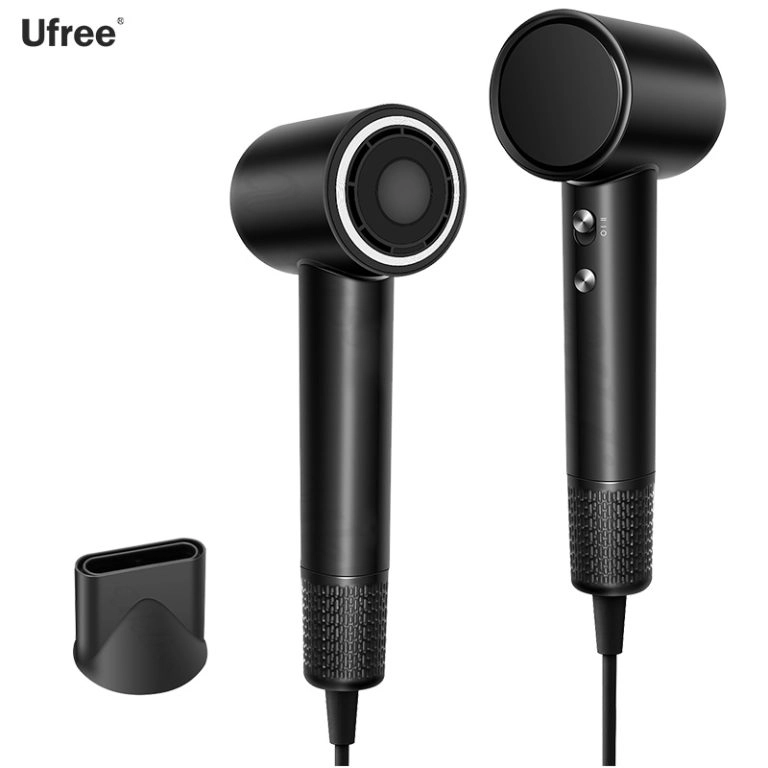
The U-8216 brief can name the combinations to review from two airflow settings and cold, warm and hot modes. Its declared noise figure is 59 dB. Ask Oucai which conditions produced that figure, then keep the answer with the result from your comparison. If your microphone position differs, the declaration cannot stand in for that reading or guarantee the level around an installed salon.
Add the service result to the noise review. A mode that sounds acceptable may still be wrong for the job if the airflow chosen for it does not finish the intended task. For a drying-time comparison, set the starting condition, section or test material and endpoint before the trials. The discussion with the customer can then concern the actual compromise instead of a preferred number.
Keep Later Changes Attached to the Accepted Result
A late accessory change is easy to overlook during quotation. It also changes the item you intend to sell. Before carrying over the noise wording, establish whether the evidence represents the revised configuration. A change to controls or electrical version raises the same question. Keep the answer with the updated quote and sample reference.
At Oucai, pre-production sampling and final inspection take place before mass production and shipment respectively. Carry the accepted U-8216 version and acoustic reference into those stages. Where this order includes an acoustic acceptance check, agree its conditions and reference sample in writing. The inspection team then has a defined task, and purchasing has a common starting point if a difference needs discussion.
A single-dryer review also has a limit. It is not an assessment of employees’ exposure over a working day. The salon adds room acoustics, other equipment and simultaneous use. HSE guidance on choosing quieter equipment advises checking likely operating conditions as well as standard test conditions. Keep that workplace question separate from whether the ordered product meets its sample brief.
Prepare a Low Noise Hair Dryer Wholesale RFQ
A low noise hair dryer wholesale RFQ can be short once the review questions are clear. Give the low noise hair dryer supplier the market, model, channel and quantities, plus the settings and conditions. Be explicit about the next response needed. Are you requesting a declaration, the model’s report or a sample discussion? Listing the response avoids confusing one kind of evidence with another.
Keep the accessory set and standard or private-label version beside the proposed wording and document request. Ask what price, MOQ, sample costs and lead time apply to that version. Retain the supplier’s answer with the quote, so a later reader is not working from assumptions. Oucai’s approval stages can structure the discussion; the actual order still needs agreed scope and terms.
Conclusion
The sample decision should explain why this low noise hair dryer wholesale configuration belongs in the range. It completes the chosen job, and its sound suits the intended channel under the agreed review. Retain the measurement basis alongside that practical judgment. If the customer accepts a compromise between noise and drying performance, make it part of the record rather than leaving it in an informal conversation.
At the next quantity discussion, return to that record. Check the electrical version and accessories and settle any question still open about the wording. To discuss your low-noise dryer requirements with Oucai, send your market, quantities, intended service and comparison conditions. A named configuration and a clear sample brief give the reply something specific to address.
Frequently Asked Questions
How can buyers compare hair dryer noise levels?
Begin with the definitions and conditions behind the numbers. The setting, accessory, position and acoustic metric need to match the comparison you mean to make. A missing field goes back to the supplier as a question. Until it is answered, the smaller figure may concern another test rather than the better fit for the customer.
Does a lower dB claim guarantee quieter salon use?
No. The declaration concerns its test conditions. An installed salon adds its own room and operating equipment, including several dryers used together. Review the product for the intended job and keep workplace exposure assessment separate. This avoids transferring a single-unit result into a promise about every installation.
Which noise test conditions belong in a wholesale RFQ?
Give the supplier the version, accessory, working settings and use case. Request the metric, position, method and evidence behind the number. If a numerical limit will go into the order, agree its acceptance method with the supplier and testing provider before approving the sample.
Is a phone recording enough to approve dryer noise?
A phone recording is helpful when colleagues want to hear what prompted a listening comment. Keep it with those notes. It cannot substantiate an absolute decibel value: the phone’s processing and the playback arrangement affect what is heard. The numerical requirement still needs a documented measurement method.