Decide what a charged sample needs to finish before comparing cordless hair straightener wholesale offers. That task determines the review setting and the charging package to use. Completing it gives you a result to discuss with the retail team. A runtime figure with no definition leaves the practical styling question unanswered.
The brief also needs a place in the US retail range. A touch-up tool can sit beside the customer’s regular straightener; a product sold for a longer session carries another expectation. Let the sample review settle which promise fits. The same decision belongs in the quote and the eventual sales description, where the customer will encounter it.
Give the Rechargeable SKU a Job in the Assortment
Portability can get a product onto the shortlist. The next decision is what it earns a place there to do. Write the intended session beside the model reference: a small touch-up task or a longer styling job. That gives “long battery life” a purpose when you discuss it with the supplier instead of leaving it as an attractive phrase.
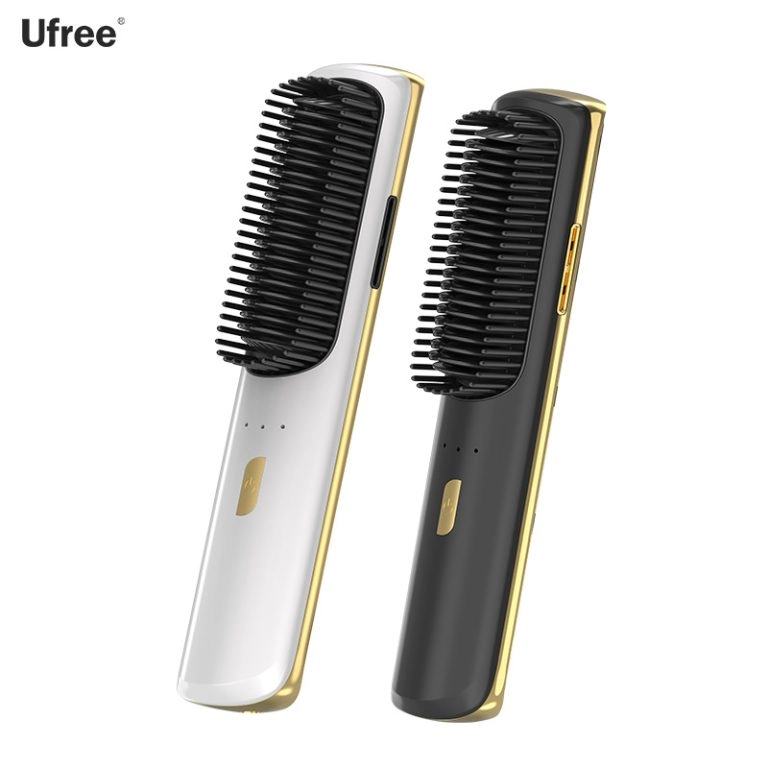
Use the Oucai hair straightener range to identify the formats for that job. Put the chosen shape beside the model reference in the brief: a brush-style tool or a hinged plate iron. Rechargeability adds preparation between uses, so include that preparation in the assessment of its retail role. The photograph and a portable label cannot settle the whole buying decision.
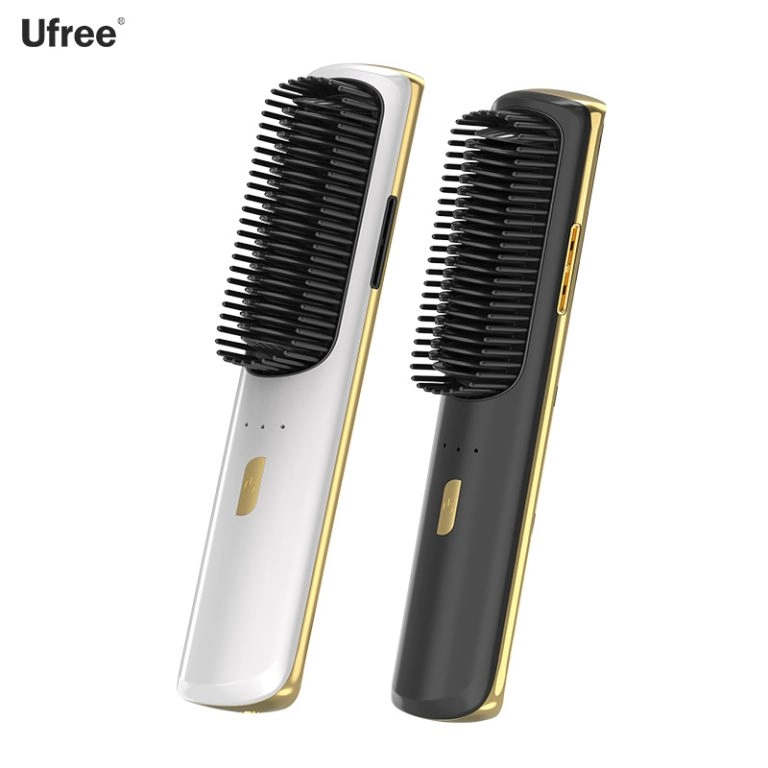
A written brief can be quite short. Describe the task or section, setting and pauses, then give the reviewer space to report the outcome. A colleague reading it should be able to perform the same session without your explanation. The package description can be written against that result, while the reviewer remains free to note problems that the brief did not anticipate.
Find Out What the Runtime Figure Actually Counts
Find the start and finish of the supplier’s runtime clock. A trial counted from switch-on differs from one concerning a selected heat setting, and a styling session may pause between passes. Keep a standby figure labelled as standby. Before the numbers enter a ranking, the buying team needs to know which clock each one belongs to.
Imagine two quotations in the shortlist. One records how long the unit stayed on; the other describes a styling sequence. Each figure might be accurate, yet you cannot use them to rank performance on the intended job. Get the starting charge, setting and reason the trial ended. Those details tell you what the figure can contribute to the decision.
A capacity number needs a voltage before you can compare battery energy. The calculation is Wh = nominal V x Ah, with mAh divided by 1,000 to give Ah; the FAA explanation of battery ratings provides this conversion. Use the specified battery voltage, rather than the input voltage beside a charging connector. This gives an energy rating. The styling task still has to be reviewed on the product.
Record warm-up separately from the work that follows it. The session notes can then describe the passes, pauses and endpoint instead of compressing everything into one duration. If the sample misses the intended task, compare the brief with another format. The travel flat iron sourcing guide addresses a mains-powered option. That decision is still open before the retail promise is approved.
Compare the Charging Package Alongside the Product
Put the charging package beside the product in the quote. You need the input requirements, connector, cable and adapter inclusion to describe that package. When a demonstration uses another arrangement, take the planned retail setup back into the review. Keep the result with the sample record, along with anything the customer will be expected to obtain separately.
An adapter-free package still needs understandable instructions about its power source. Work through that wording while the manual and listing can be edited. An accessory saving on the quote leaves this question open until somebody answers it. Keeping the requirement with the order also gives support staff a clear description of the charging arrangement delivered to the customer.
The connector is one entry in the charging specification. A time claim also needs the supported input and the arrangement used for that claim. Ask the wireless hair straightener supplier for those details and review the retail setup. If the cable or required power source changes later, check whether the earlier result still represents the proposed package.
List use while charging as a separate request to be answered from the model’s instructions. The connection can be present without settling whether heating during charging is permitted. Only the approved mode belongs in the brief or sales listing. Review that operation with the product unmodified and its controls left in place.
Put the U-8276 Through the Intended Session
Use the full name U-8276 rechargeable hair straightener in an Oucai inquiry. Its comb-style format gives the reviewer a specific tool to assess. Put that format, the intended session and requested configuration together in the sample brief. A quote for a hinged plate iron would need its own review; the two shapes should not be treated as one approved styling product.
Agree the procedure before the sample decision. Start from a defined charge condition, select the intended heat setting and complete the chosen task using comparable sections and pauses. The endpoint matters: record whether the task finished and what ended the trial. Follow the operating instructions throughout. Formal temperature or endurance claims need an agreed measurement method and appropriate testing expertise.
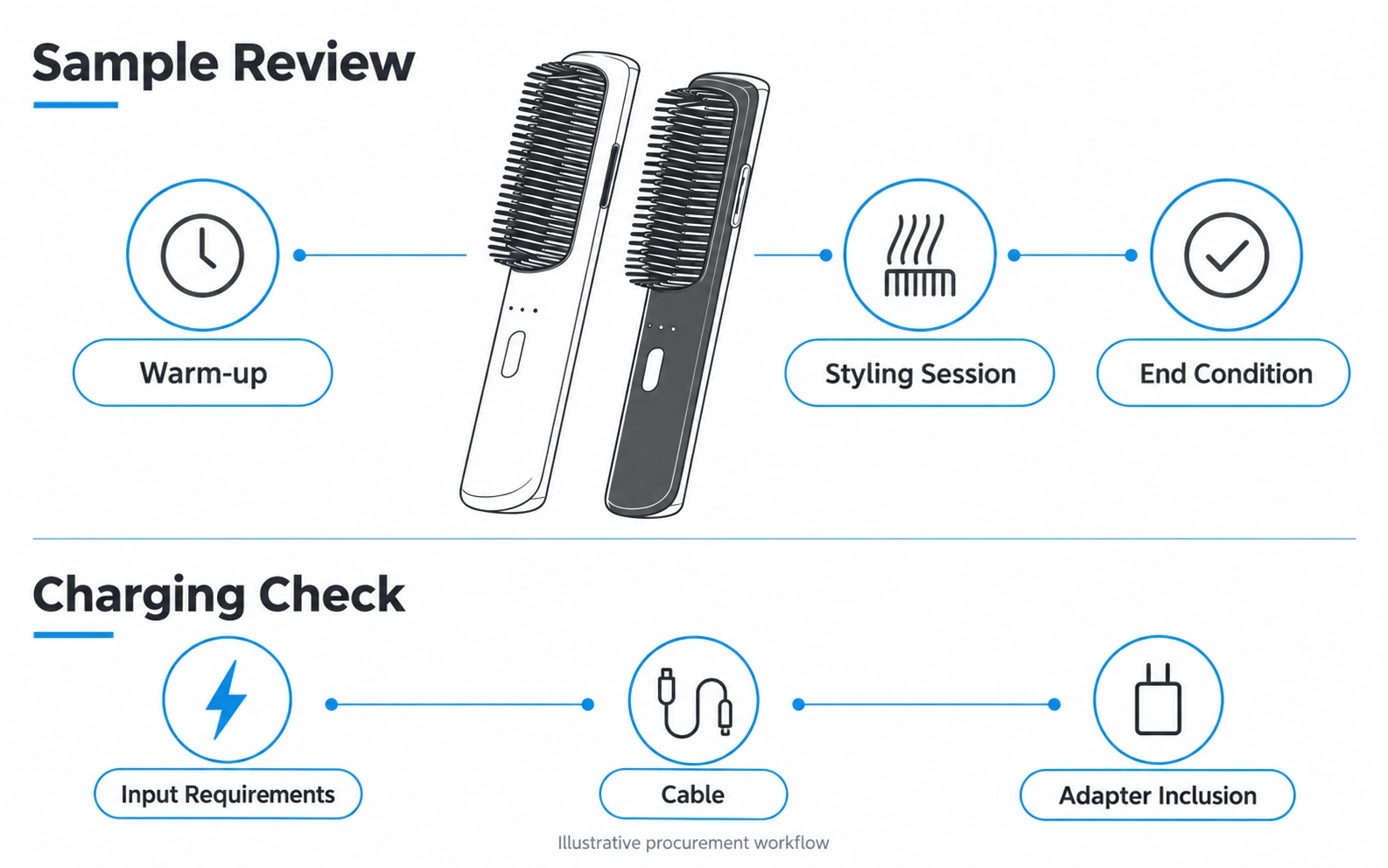
In the U-8276 record, keep the sample identity beside the setting, charging arrangement and outcome. Apply the agreed session to the comb-style product, using the passes and pauses relevant to that work. Oucai and the buyer can then return to a particular result when discussing a change. The same record gives the retail team a basis for writing about this rechargeable model without expanding the promise beyond the review.
Before asking for a specification change, compare how the two reviews were carried out. Return to the sections, pauses, starting condition and charging arrangement in the brief. A difference in use can be mistaken for a difference in the sample. Establish which result the team wants changed, then give the supplier that purpose with the revision request.
Take the Accepted Result into the Retail Promise
Read the proposed package description beside the session notes. “For touch-ups” has a different meaning to a shopper from a promise about completing a longer styling session. Keep the wording within what was reviewed, with the conditions retained in the approval record. Marketing then has a result it can describe rather than a gap to fill from a demonstration.
At Oucai, pre-production sampling and final inspection take place before mass production and shipment respectively. Bring the U-8276 configuration, accessories and instructions into those stages. If the order makes runtime an acceptance condition, specify the threshold and review method in writing. That gives the inspection team an agreed task and allows purchasing to discuss the result against the order reference.
Every additional promise needs its own confirmation. If the package will mention fast charging, use while charging or air travel, resolve that point before artwork approval. Rechargeability alone does not establish those features or permissions. Keep the answer beside the proposed wording; it is another part of approval, separate from the styling session already reviewed.
Build the Cordless Hair Straightener Wholesale RFQ
Use the cordless hair straightener wholesale RFQ to distinguish the settled choices from the unanswered requests. Give the market, model, quantities, intended session and charging package, with the sample criteria and proposed branding. A cordless flat iron OEM brief should state the hinged plate shape. That keeps the request distinct from the U-8276 comb-style example and tells the supplier which format to quote.
Attach the accessories, instructions and proposed retail wording to the quotation request. Let the supplier state the available options and the price, MOQ, sample costs and lead time for that version. Retain the reply beside the quote. Another model or a package with different charging accessories needs a comparison of its own.
Leave unanswered requests visible in a private label cordless hair straightener project. Battery access, another charging mode or custom electronics still needs a specific reply; a broad OEM description does not settle those points. This gives the next sample discussion a useful boundary. It concerns the changes required for the chosen product instead of continuing an open-ended search for features.
Conclusion
A cordless hair straightener wholesale review should end with a product choice and a record worth keeping. The session explains the assigned job. The runtime definition and charging arrangement explain how it was reviewed. Retain the outcome with the configuration and retail wording, where another colleague can find it during the next quantity or artwork discussion.
If the sample misses the brief, reconsider its role or compare another format before making the sales promise broader. To request a cordless straightener sample review from Oucai, send the market, quantities, intended session and charging requirements. A full product reference and a defined package give the reply something concrete to address and leave purchasing with terms it can compare.
Frequently Asked Questions
How should buyers verify cordless straightener runtime?
Get the definition of the claim, then agree a session matching the retail brief. Record starting charge, setting, warm-up, passes and pauses, including why the trial ended. The useful result is completion of that task. Capacity or standby time alone cannot establish whether the sample meets the intended styling promise.
Does a USB connector prove fast charging?
No. Get the input requirements and the arrangement supporting the time claim, then review the retail cable and power source under the supplier’s stated conditions. An adapter-free package still needs instructions about the external power source. The connector alone does not answer those purchasing questions.
Can a cordless straightener be used while charging?
The model’s instructions need to permit that operating mode. A charging connection does not answer the heating question on its own. Establish the approved use before describing the feature, then review it through normal operation. A modified unit or bypassed control cannot substantiate a claim for the retail product.
What belongs in a cordless flat iron RFQ?
Provide the market, full product reference, quantities, session brief and charging package, plus the sample criteria and branding request. Ask for a reply identifying both confirmed options and points still open. Keep the quoted terms attached to that version, so the buying team has a defined offer to compare.