Hair straightening is no longer a one-format category. In 2026, wet-to-dry and airflow-based straighteners are drawing more attention alongside conventional flat irons. Dyson Airstrait uses heated directional airflow without hot plates, while Shark SilkiPro Straight combines high-velocity airflow with heated ceramic plates. The two sit in the same trend but use different architectures.
That shift is already changing the questions B2B buyers ask when they compare new straightener programs: is the added technology worth the higher cost and extra complexity, or will a familiar flat iron still sell more efficiently in the target channel?
Oucai is a Zhejiang-based B2B supplier of personal hair-care and men’s grooming products. Its straightener range includes conventional and wind-assisted formats, which makes this comparison directly relevant to importers, distributors, retailers, and private-label brands evaluating their next sourcing program.
This guide looks at air straightener vs flat iron from that purchasing angle—market fit, electrical requirements, usability, landed cost, return risk, and supplier execution.

Why Air Straighteners Matter in 2026
Wet-to-dry styling gives retailers a fresh premium story and e-commerce sellers an easy product to demonstrate. It also brings more questions around controls, user education, maintenance, and after-sales handling. The trend matters when the added function changes customer demand, selling price, or support cost.
Wet-to-Dry Styling Is Expanding the Category
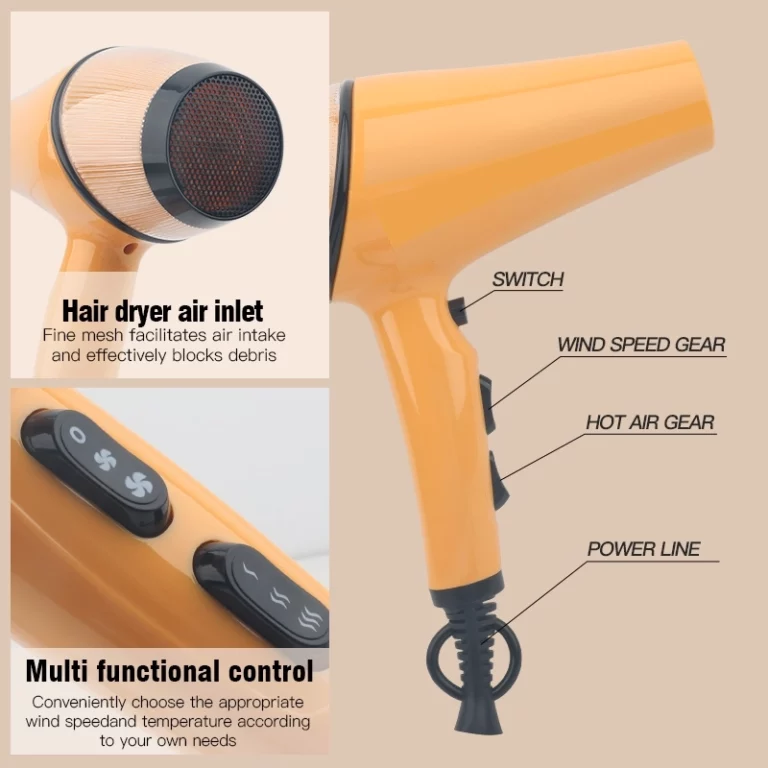
An airflow hair straightener is not a standard technical specification. Dyson Airstrait dries and straightens with heated airflow and no hot plates. Shark SilkiPro Straight combines airflow with ceramic plates and Wet and Dry modes.
A buyer evaluating a wet to dry hair straightener needs more than a category name. The RFQ has to define what performs the drying, whether heated plates are involved, how heat is controlled, and how much the styling routine differs from a conventional iron.
Traditional Flat Irons Still Have a Strong Business Case
A conventional flat iron offers one advantage newer formats cannot automatically replace: familiarity. Customers already know the basic product, which can simplify product-page messaging and reduce the learning curve after sale.
That keeps a ceramic flat iron commercially relevant. For a value-led line, familiar operation and a clear price-to-function story may matter more than a new technology label.
Air Straightener vs Flat Iron: What Changes for B2B Buyers?
Once the trend is separated from the hype, the comparison becomes practical. Extra airflow systems, sensors, modes, or controls can strengthen a premium proposition, yet they may also affect packaging, inspection, support, and returns. The useful question is which format creates a clearer value proposition for the target channel.
Product Architecture Affects More Than Unit Price
A bulk order is rarely defined by factory price alone. A more involved styling system may also need different packaging, clearer instructions, or more after-sales support.
If the added function helps defend a higher selling price, the extra cost can make sense. If the benefit cannot be explained in one or two clear sentences, it may be difficult to monetize.
A traditional flat iron often has a shorter path from shelf to sale. An air-assisted design can offer stronger differentiation, but the margin has to support the added complexity.
User Learning Curve Can Become Return Risk
Not every return starts with a defective appliance. A product can work correctly and still create complaints when users are unsure about controls, wet/dry modes, or the normal styling sequence.
This matters especially in e-commerce. During sample evaluation, see how quickly a first-time user can identify the basic controls. A few minutes of testing can expose issues that never appear on a specification sheet.
Which Specifications Matter in Hair Straightener Wholesale?
After the format is chosen, technical specifications become more useful. Maximum temperature and mode count are easy to compare, but electrical configuration, usable heat control, plate design, and sample-to-production consistency have a more direct effect on a hair straightener wholesale project.
Use Verified Specifications as Buying Checkpoints
The U-9162 listed by Oucai provides a practical conventional-flat-iron benchmark. It uses a ceramic plate, PTC heating, an LCD display, and 10 temperature levels, with a 110–240V, 50–60Hz power supply. The model also carries a one-year warranty and free spare-parts support.
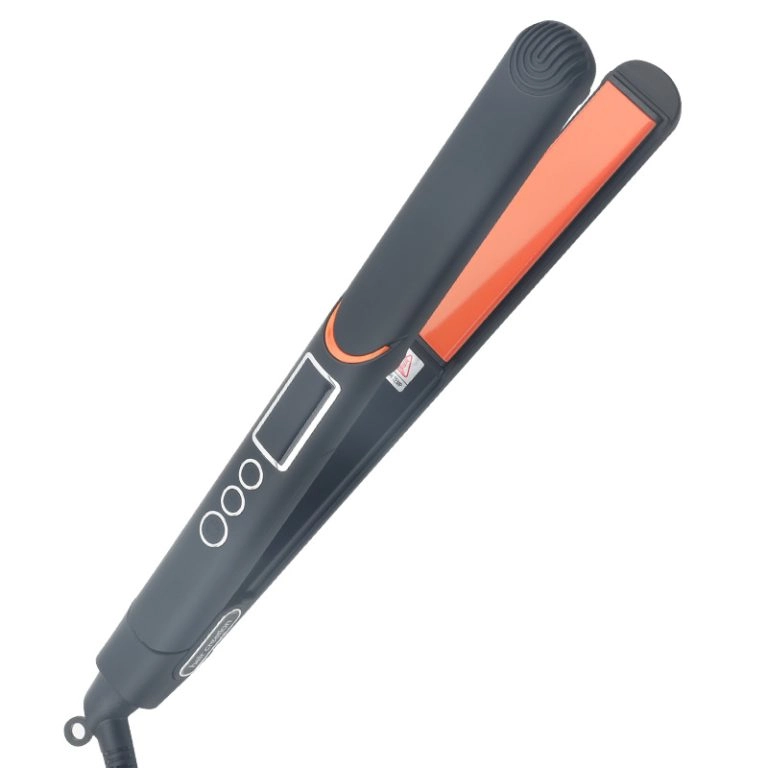
These details create useful checkpoints for sampling and quotation. Adjustable heat gives users more control, while the electrical range helps the importer confirm the version required for the destination market.
Run several heat cycles, check plate alignment and hinge movement, operate the controls repeatedly, and repeat critical checks on the final production sample.
More Specifications Do Not Automatically Create More Value
A higher temperature ceiling or longer feature list can look stronger on a comparison sheet. That does not make it a better buy.
For a private label hair straightener, every added function has to pay for itself through better usability, a stronger retail story, or a price premium. If customers neither need nor notice it, the feature is simply added purchasing cost.
Once the specification is clear, the sourcing risk moves from product selection to execution.
How to Compare a Hair Straightener Supplier Before Bulk Ordering
A good product can still become a difficult order when the approved sample, electrical version, packaging, quantity, and commercial terms do not stay aligned. Oucai uses a pre-production sample before mass production and carries out final inspection before shipment, giving buyers two practical control points.
Tie the Approved Sample to the Purchase Order
The final PO can tie the approved sample to the exact SKU, electrical configuration, accessories, packaging, quantity, and inspection requirements. Both sides then have one production reference instead of relying on a broad catalog description.
Branding, packaging, plug configuration, and other requested changes can affect sampling, MOQ, and lead time. Confirm these points before committing to a launch date.
For a hair straightener supplier comparison, that production discipline can matter more than another row of headline specifications.
Count After-Sales and Maintenance as Real Costs
The quotation does not show what happens after the product reaches the market. Through its after-sales service, Oucai provides repair or replacement for manufacturing defects within the applicable warranty period, out-of-warranty repair, original replacement parts, and technical support for setup, operation, and troubleshooting. Warranty periods vary by product.
For a distributor, that creates alternatives to writing off every defective unit. Exact warranty and spare-parts terms still need agreement for the selected SKU.
Maintenance belongs in sample evaluation too. On a conventional straightener, plate condition, hinge movement, cord handling, controls, and cleaning access are practical checks.
Applying the Comparison to Oucai’s Straightener Range
By this stage, customer, channel, price, electrical requirements, and service expectations have narrowed the field. Oucai’s range gives buyers a conventional route and a wind-assisted format to evaluate.
U-9162 for a Conventional Flat-Iron Program
For distributors building a conventional straightener range, the U-9162 fits projects where familiar use, adjustable heat, and straightforward retail positioning matter more than adding an airflow story.
It gives the buyer a defined format to sample, price, and compare without adding the learning curve of a wet-to-dry system. Its role here is not to win a feature-count contest; it is to offer a clear conventional format for a channel that values familiar operation.
When a Wind-Assisted Format Is Worth Evaluating
For buyers exploring another direction, Oucai also offers the U-9158 Hair Straightener with Wind. Airflow, power, temperature, and wet/dry operating details need project-level confirmation before the model is compared directly with other air-straightening systems.
A sample can then answer the commercial question that matters most: does the wind-assisted function create enough user value to support the intended retail position?
Conclusion
Air straightening has clear momentum in 2026, but the air straightener vs flat iron decision will remain relevant beyond one trend cycle. A successful B2B program still depends on market fit, electrical configuration, useful features, landed cost, return exposure, production control, and after-sales support.
For distributors, wholesalers, retailers, and private-label brands planning a hair straightener wholesale project, contact Oucai to request a sample, confirm the required configuration, and obtain a quotation. Share the target market, estimated quantity, electrical requirements, packaging needs, and planned launch schedule so the project starts with a clearly defined SKU.
FAQs
Q1: What is the main difference between an air straightener and a flat iron?
A: An air straightener uses airflow as part of styling, while a conventional flat iron relies mainly on heated plates. Some wet-to-dry products combine both, so the actual architecture still needs checking.
Q2: What specifications matter most in a hair straightener wholesale order?
A: Electrical configuration, usable temperature control, plate design, control usability, packaging, and sample-to-production consistency are the main checks.
Q3: Is a higher maximum temperature better for a hair straightener?
A: Not necessarily. The useful range depends on the target customer and retail position.
Q4: What needs to be confirmed with a hair straightener supplier before mass production?
A: Confirm the exact SKU, electrical version, approved sample, packaging, quantity, inspection scope, lead time, warranty responsibility, and final commercial terms.
Q5: What can affect MOQ and lead time for a private label hair straightener?
A: Model choice, order quantity, packaging, branding, electrical requirements, and other requested changes can affect sampling and production timing.