In 2026, blade technology continues to influence how professional hair clippers are positioned across barber, wholesale, and private-label markets. DLC-coated blades continue to appear in premium professional barber tools, while stainless steel remains a practical choice across established clipper programs.
For B2B buyers, the decision is not about choosing the newer-sounding option. It is about matching blade construction, maintenance needs, product positioning, and total sourcing cost to the target channel.
Oucai is a Zhejiang-based B2B supplier of personal hair-care and men’s grooming products, including professional hair clippers for overseas wholesale and private-label projects. With both DLC-blade and stainless-steel options in its range, the comparison is directly relevant to buyers evaluating a new clipper program.
The sections below focus on the technical differences, real-use considerations, cost implications, and checks that matter before bulk ordering.
Why Blade Choice Matters for Professional Hair Clippers
Two clippers described as “DLC blade” may still differ in blade geometry, base construction, motor pairing, and replacement parts. Before comparing quotations, buyers need a clear product specification and an approved sample that represent the version intended for bulk production.
DLC Is a Coating, Not the Whole Blade Specification
DLC stands for diamond-like carbon. In professional blade systems, it is a surface coating rather than a complete description of the blade underneath. DLC coatings are used to improve surface hardness and reduce friction, with heat management also part of professional blade design.
That does not make every DLC blade perform the same way. Alignment, blade geometry, coating quality, lubrication, and motor behavior still influence cutting feel and wear.
A quotation that only says “DLC blade” does not prove that two offers use equivalent blade systems. The blade configuration needs to stay tied to the approved sample and final SKU.
Stainless Steel Still Has a Strong Wholesale Role
A stainless steel clipper blade can be the cleaner fit when a project calls for familiar specifications and a straightforward professional position.
That often suits mainstream distribution, value-focused professional ranges, or private-label programs built around a fixed retail target. A premium coating adds commercial value only when the channel can turn it into a meaningful product benefit or stronger positioning.
DLC vs Stainless Steel: What Changes in Real Use?
Once samples arrive, heat, cutting consistency, cleaning, lubrication, and replacement planning matter more than the label in a quotation. These points affect both the barber using the tool and the distributor handling service questions later. A good coating cannot compensate for poor alignment or a weak blade-and-motor match.
Check Heat, Wear, and Maintenance on the Sample
Run sample clippers through repeated operating cycles. Check blade temperature, alignment, cutting consistency, hair buildup, lubrication points, and cleaning access.
A low purchase price loses appeal if the blade needs frequent adjustment or service parts are hard to source. With barber clippers, confirm that the exact replacement blade can be identified and supplied after launch. That can affect downtime, after-sales workload, and repeat orders.
Blade Material Alone Does Not Decide Cutting Performance
Professional barber clippers work as complete cutting systems. Blade geometry, cutting gap, motor response, vibration, battery delivery, housing balance, and maintenance all influence actual use.
RPM is a good example. A higher motor speed may be useful, but it does not automatically make one clipper better. Repeated-use testing still needs to show smooth cutting without excessive heat, vibration, or noise.
Blade material is only the first screening point. Motor, battery, controls, and handling decide whether the finished clipper fits a professional program.
Which Clipper Specifications Matter Beyond the Blade?
For wholesale hair clippers, useful specifications are the ones that affect working time, service cost, user comfort, or retail value. Motor type, battery capacity, charging time, and included accessories all need to be judged in the context of the complete clipper.
Motor, Battery, and Handling Need to Work Together
Motor behavior is best judged with the fitted blade under repeated use. Cutting consistency, vibration, heat, and control response give a fuller picture than RPM alone.
The U-5157 professional hair clipper in Oucai’s range combines a DLC blade and magnetic motor with a 2000mAh lithium battery and a three-hour charging time.
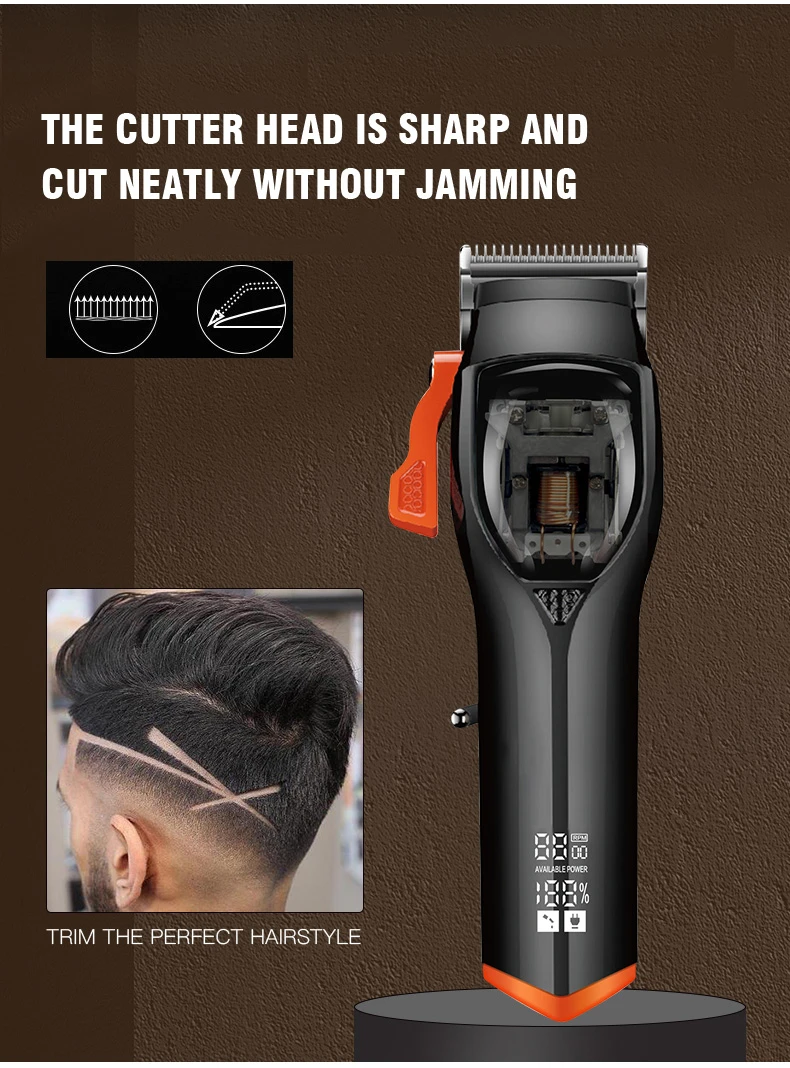
Those figures are useful for sample planning, but battery capacity alone does not establish runtime. Actual cordless working time remains a sample-test item.
Accessories and Service Affect Cost After Sale
The purchase price is not the end of the cost calculation. Maintenance items, replacement parts, defect handling, and technical support all shape the cost of carrying a clipper line.
Oucai’s after-sales service covers repair or replacement for manufacturing defects within the applicable warranty period, out-of-warranty repair, original spare parts for replacements, and technical support for setup, operation, and troubleshooting. Warranty periods vary by product.
For a distributor, that gives more options than treating every defect as a complete-unit loss. Exact warranty terms and spare-parts arrangements still need confirmation for the selected model.
How Blade Choice Affects Wholesale Cost and Order Risk
Once the technical configuration is clear, the next question is commercial: which features are worth paying for? A DLC-coated configuration can support a premium position, while stainless steel may fit programs where coating is not central to the offer.
Avoid Paying for Features the Market Will Not Reward
DLC coating, high RPM, larger battery capacity, metal housing, and extra accessories can all be useful. They can also raise sourcing cost without improving the business case.
If a feature does not support a clearer customer benefit or stronger selling price, it may simply make the SKU more expensive. This matters in private-label projects, where several upgrades added together can shift the finished product away from its original price tier.
Tie the Approved Configuration to Bulk Production
When comparing a hair clipper supplier, sample approval needs to cover the complete product: blade configuration, repeated-use heat, cutting consistency, controls, charging, accessories, cleaning access, and packaging.
Oucai uses a pre-production sample before mass production and a final inspection before shipment.
For private-label hair clippers, branding, packaging, accessories, and other requested changes also need to be settled before launch timing is fixed. Confirm MOQ, lead time, and the final configuration at project level, then make sure the purchase order reflects the approved sample.
Applying the Comparison to Oucai’s Hair Clipper Range
The same criteria apply when comparing models for a new wholesale or private-label program. Oucai’s range includes both DLC-blade and stainless-steel professional options. Sample results, target price, and channel fit still decide which direction works better.
U-5157 for a DLC-Blade Professional Program
For a feature-led professional clipper line, the U-5157 provides a DLC-based option for sampling and quotation comparison. The model accepts OEM and ODM projects and includes a comb, brush, and oil.
Its value does not come from the DLC label alone. The blade, magnetic motor, battery setup, handling, and final sample need to support the intended product position as a complete package.
U-855 for a Stainless-Steel Professional Program
The U-855 professional hair clipper takes a different route. Its confirmed configuration includes a stainless steel blade and metal handle, with the model positioned as a professional hair clipper.
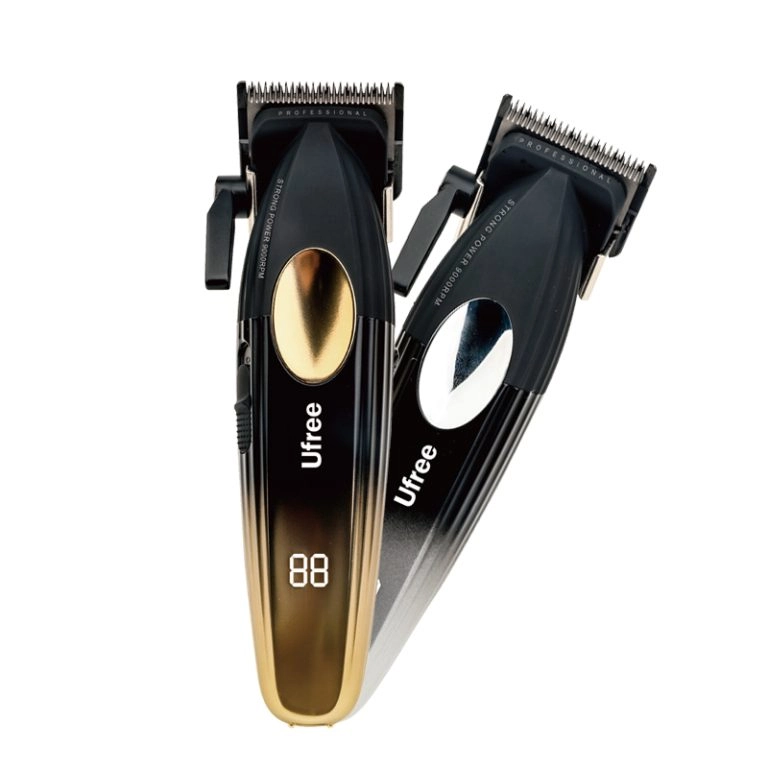
For a straightforward professional line, that gives buyers a clear starting point for sample and price comparison without making a premium coating the center of the offer.
A move to DLC is easier to justify when sample testing shows a useful advantage for the intended application and the sales channel can absorb the added cost.
Conclusion
DLC-coated and stainless steel blade configurations can both work in professional hair clippers. DLC is more relevant when the coating supports the performance expectations and product position of a premium program. Stainless steel remains practical when a familiar blade specification and simpler product story fit the project better.
For distributors, wholesalers, barber-supply businesses, and private-label brands sourcing wholesale hair clippers, compare the whole machine: blade system, motor response, charging, maintenance, replacement availability, sample consistency, and after-sales support.
Contact Oucai with your target market, quantity, preferred blade direction, packaging requirements, and launch timing to discuss samples and a project quotation.
FAQs
Q1: Is a DLC-coated blade better for every professional hair clipper?
A: No. The better choice depends on the blade system, motor behavior, workload, maintenance needs, target price, and sales channel.
Q2: What is the difference between a DLC-coated blade and a stainless steel clipper blade?
A: DLC is a surface coating, while stainless steel is a blade material. A direct comparison needs the full blade specification and sample performance.
Q3: Does higher RPM mean better barber clippers?
A: Not necessarily. Motor speed needs to be considered with blade alignment, cutting consistency, vibration, heat, battery performance, and workload.
Q4: What do buyers need to confirm with a hair clipper supplier before a bulk order?
A: Confirm the SKU, blade configuration, approved sample, accessories, packaging, quantity, inspection requirements, MOQ, lead time, warranty responsibilities, and commercial terms.
Q5: When is a DLC-coated blade worth the extra cost for wholesale buyers?
A: It is easier to justify when sample testing shows a useful advantage and the target channel can support the added product cost or stronger retail position.