Plate size can look like a small detail on a flat iron specification sheet, but it has a direct effect on product positioning. It influences how much hair the plates cover, how easily the tool handles shorter sections, and whether one SKU feels meaningfully different from another.
For distributors, salon suppliers, e-commerce sellers, and private-label beauty brands, the question is not simply whether a wider plate is better. A more useful starting point is the target customer: short or long hair, general styling or larger-section straightening, broad retail or a more specialized professional channel.
This flat iron plate size guide looks at narrow, general-purpose, and wide plate formats from a B2B sourcing perspective. It also covers 1 inch flat irons, wide plate flat irons, sample checks, and SKU planning, so buyers can move from product comparison to a clearer wholesale decision without relying on vague size labels.

Flat Iron Plate Size at a Glance: Narrow, General-Purpose and Wide Plates
Flat irons are commonly discussed as narrow, roughly 1-inch, or wide-plate formats. Those labels are useful for shoppers, but a B2B buyer needs the actual dimensions behind them. Narrow plates favor placement and control, a general-purpose width can cover a broad styling range, and wider plates can provide greater section coverage. None of those positions is automatically better.
Plate Width Comparison by Styling Use and Market Position
| Plate format | Typical styling use | Main strength | B2B product position |
| Narrow | Short sections, roots, detailed styling | More control in smaller areas | Specialist or compact SKU |
| Around 1 inch | General straightening and multi-style use | Balance of coverage and control | Core general-purpose SKU |
| Wide plate | Long, thick, or dense hair | Greater section coverage | Separate performance-focused SKU |
The 1 inch flat iron is useful as a market reference because it sits between precision and larger-section coverage. A wide plate flat iron serves a more specific use case and should have a clear reason to exist alongside the core model.
How Plate Width Affects Coverage, Control and Product Positioning
Once the basic size categories are clear, width needs to be considered as part of the whole tool. A wider surface changes section coverage, while a narrower one gives the stylist more room to work around smaller areas. Plate length matters as well. Separating these measurements makes supplier quotations easier to compare and gives the approved sample a much clearer specification.
Plate Width vs Plate Length: Two Different Sourcing Specifications
Plate width refers to the shorter dimension across the heating surface, while plate length runs along the longer axis of the straightener. Together they determine the usable working area, but they should not be treated as the same specification.
For an RFQ, dimensions such as 24 × 105 mm are more useful than a label such as “standard plate.” Two products can be marketed with similar wording while using different physical dimensions.
Once those measurements are fixed, the next question is commercial: which plate-width position deserves to become the main SKU?
1 Inch Flat Iron: The Core General-Purpose Segment
The 1 inch flat iron remains an important product-search category because this size range can cover many everyday styling situations without becoming highly specialized. For a distributor launching a compact assortment, a general-purpose format can be easier to position than several similar sizes from day one. Still, “1 inch” is a common market description, not a universal engineering standard. Buyers should work from the measured plate specification.
Where a General-Purpose Flat Iron Fits a B2B Range
General-purpose widths can suit salon supply, beauty retail, e-commerce, and mixed-use styling ranges where the product needs to work across more than one customer profile.
The Ufree U-9162 Hair Straightener in Oucai’s range uses a 24 × 105 mm ceramic plate and a 110–240V, 50–60Hz power supply. Those figures give buyers a concrete dimensional reference when comparing a real sample with an intended product position.
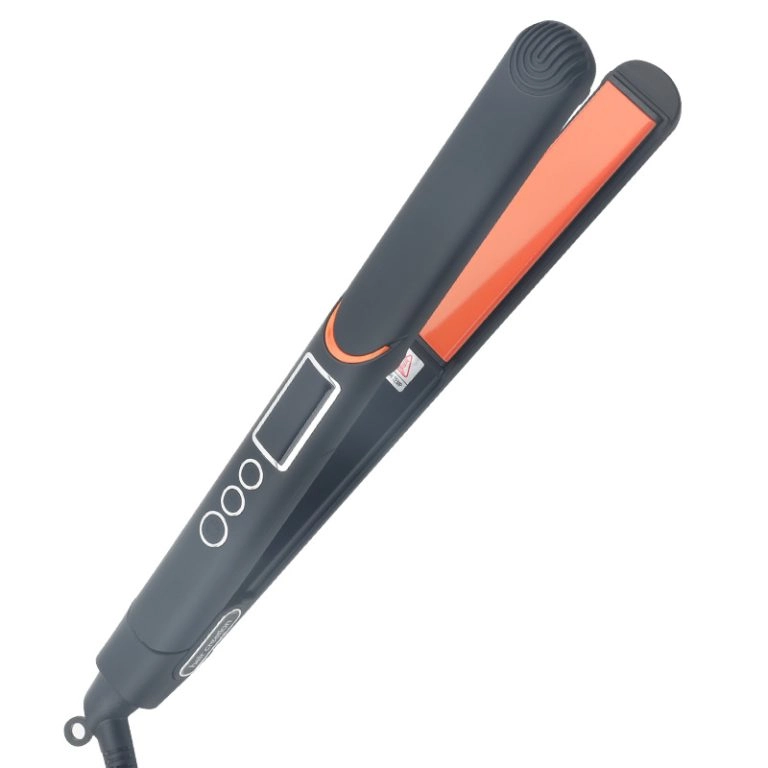
The 24 mm width should stay 24 mm in the purchasing specification. Relabeling it as an exact 1-inch plate would be less precise, since one inch is 25.4 mm.
Wide Plate Flat Iron: When a Larger Plate Earns a Separate SKU
A wide plate flat iron addresses a different buying question. It is usually considered when larger-section coverage matters more than fine placement. That makes searches such as 2 inch flat iron, flat iron for thick hair, and wide plate hair straightener commercially useful terms, especially for sellers building ranges around long, dense, or curly hair. For a wholesaler, however, the plate needs a distinct product role rather than just a larger number on the specification sheet.
Long, Thick and Dense Hair as a Separate Product Position
When evaluating a 1.75-inch or 2 inch flat iron, buyers should look at whether the wider format creates a clear benefit for the intended channel. Larger plates can cover broader sections, while a smaller format gives more control around shorter areas and detail work.
This distinction is also easy to demonstrate visually. A salon educator, TikTok seller, or Instagram Reels creator can show the plate-width difference quickly without turning the demonstration into a long technical explanation.
That visual value is useful, but it should support—not replace—the commercial case. The target customer, styling job, and price position still need to justify the SKU.
Buyers comparing possible formats can also review the broader Oucai hair straightener range before narrowing the assortment.
1 Inch vs Wide Plate Flat Iron: SKU and Channel Strategy for Wholesale Buyers
The next decision is no longer simply which tool works on which hair type. It is whether two plate widths deserve separate inventory. A consumer searching 1 inch vs 2 inch flat iron may want one personal recommendation. A distributor has to consider forecasting, retail positioning, product-page differentiation, and whether the second SKU reaches a customer that the first one does not.
One Core SKU or Two Plate-Size Positions?
A broad beauty retail range may be well served by one general-purpose flat iron. A salon-focused or thick-hair-oriented channel may have a stronger reason to carry a wider option as a second position.
Before adding both, check whether the second SKU has:
- a distinct target hair profile;
- a clear styling application;
- a different enough sales proposition;
- a sensible price position;
- enough channel demand to justify separate inventory.
The distinction should also be easy to explain in a distributor catalog, e-commerce listing, or buyer presentation. If both products sound almost identical once the plate width is removed, the assortment may be overlapping.
After the SKU strategy is settled, the next step is physical validation.
What Wholesale Buyers Should Test on Flat Iron Samples
A drawing can confirm flat iron plate size, but it cannot show how the finished sample handles hair. That matters for a professional flat iron, where plate contact, glide, hinge movement, and repeated handling can influence the user experience. The sample stage should therefore test the intended configuration rather than simply confirm that the product powers on and reaches a selected setting.
Plate Contact, Glide and Repeated Handling
Close the tool slowly and look at how the plate surfaces meet. During styling tests, check for obvious gaps, uneven contact, snagging, or hair catching around the edges.
When several supplier samples are being compared, use the same hair section, temperature setting, and basic test method. Record the sample model, plate dimensions, and test conditions at the same time. That keeps later production checks tied to the same approved reference rather than to memory.
Grip, hinge movement, cord handling, and overall balance are worth checking across repeated styling cycles too. These details become especially important when the tool is intended for frequent salon or professional use.
Plate Size in a Private Label Flat Iron RFQ
Once the product position and sample checks are clear, the RFQ becomes much easier to compare. Buyers sourcing wholesale flat irons, a private label flat iron, or a broader professional hair straightener range should avoid briefs built around only a reference image and target price. Plate dimensions, electrical requirements, styling use, and packaging direction can change the commercial offer even when two tools look similar in a photo.
Specifications to Confirm Before Sampling
A practical RFQ should cover:
- plate width and plate length;
- plate material;
- intended styling use and target market;
- voltage, plug, and cord requirements;
- temperature-control requirements;
- branding and packaging direction;
- sample acceptance points.
The objective is not to create the longest possible specification sheet. It is to fix the details that affect the product, quotation, and approval process before different assumptions enter the project.
Conclusion
Flat iron plate size should match a product position, not a belief that bigger plates automatically mean a better tool. A general-purpose width can cover a broad customer base, while a wide plate flat iron can create a separate proposition for long, thick, dense, or curly hair.
For B2B buyers, the sequence is fairly practical: define the target channel, choose the plate-width position, confirm the real dimensions, test the sample, and keep the approved configuration tied to the final order.
For a new straightener project, buyers can contact Oucai for product selection and wholesale inquiries with the target market, expected quantity, required format, branding direction, and key sample requirements.
FAQ
Q1: What flat iron plate size is best for most hair types?
A: A general-purpose width around the 1-inch segment can suit a broad range of styling situations because it balances section coverage and control. The final choice should still reflect hair length, density, styling use, and the target sales channel.
Q2: Is a 1 inch flat iron more versatile than a wide plate flat iron?
A: A 1 inch flat iron generally covers a broader mix of styling jobs. A wide plate flat iron has a more specialized role where larger-section coverage is important, particularly on long or dense hair.
Q3: Is a 2 inch flat iron better for thick hair?
A: A 2 inch flat iron provides more surface coverage, which can suit long, thick, or dense hair. It is not automatically the right option for every customer, since smaller plates offer more control around shorter sections and detailed styling.
Q4: What size flat iron works well for short hair?
A: Narrow or general-purpose plates usually give better placement around shorter sections, roots, and detailed areas. The right choice depends on the styling job rather than plate width alone.
Q5: What plate specifications should wholesale buyers confirm before ordering flat irons?
A: Buyers should confirm plate width, plate length, plate material, intended use, target market, electrical requirements, temperature controls, branding, packaging, and the acceptance points used to approve the final sample.