A cordless hair clipper can offer long runtime and still create costly problems if battery replacement is considered too late. Once the housing, tooling, and sample are fixed, a change in battery access may affect the enclosure, instructions, testing, and launch schedule.
That matters in 2026 because Article 11 of the EU Batteries Regulation applies from February 18, 2027 to products within its scope that incorporate portable batteries, with defined derogations. For importers, distributors, and private-label brands, battery capacity is no longer the only buying point.
When sourcing a replaceable battery hair clipper, buyers also need to evaluate battery access, spare-battery supply, after-sales cost, and regional product requirements. Oucai supports international OEM hair clipper projects from product configuration through sampling and bulk production.
Why Replaceable Batteries Matter to 2026 Hair Clipper Projects
A 2027 requirement creates purchasing decisions in 2026 because a new cordless clipper still moves through product configuration, sampling, testing, packaging, production, and shipment.
Battery architecture touches several of those steps. Settling it early keeps later approvals cleaner; leaving it open can send housing, service parts, documentation, or launch planning back into review.
That is why battery serviceability belongs in the sourcing brief rather than becoming an after-sales question near launch.
Battery Runtime Is Only Half the Product-Life Question
Runtime matters in professional use, but it describes the battery while it is healthy. Long-term support starts when battery performance declines.
Article 11 also requires a compatible replacement to preserve the product’s function, performance, and safety. Relevant batteries must remain available as spare parts for at least five years after the last unit of the equipment model is placed on the market, at a reasonable and non-discriminatory price.
For buyers sourcing OEM hair clippers, that affects warranty handling, replacement-battery inventory, and long-term SKU support. It also raises another question: does the same battery architecture make commercial sense in every market?
One Global Design or a Regional SKU?
A single global platform can simplify purchasing, stock planning, and repeat orders. A regional SKU may be more practical when a market-specific requirement materially changes housing, tooling, service, or product cost.
Neither route is automatically cheaper. Two versions add documentation, packaging, forecasting, and spare-parts complexity; one higher-specification global design can add cost where the feature brings limited commercial value.
Oucai’s professional hair clipper range includes several cordless platforms that buyers can evaluate before moving into a custom program.
What Belongs in an OEM Hair Clipper Battery Brief?
Once the market strategy is set, the RFQ needs enough detail for suppliers to quote the same product. Capacity and charging time are straightforward. Battery access, replacement supply, housing changes, and service support are more likely to create different assumptions between suppliers. A precise brief makes an OEM hair clipper supplier easier to compare and reduces the risk of discovering an engineering change after the sample process has already started.
Define Battery Access Before the Quote Is Finalized
For a future replaceable battery hair clipper project, confirm:
- how the battery is accessed;
- which tools are required;
- how a compatible replacement is identified;
- whether replacement preserves normal function and safety;
- how removal and replacement instructions will be provided;
- whether housing, fasteners, sealing, or tooling need to change.
For end-user removability, Article 11 permits commercially available tools and excludes the need for proprietary tools, thermal energy, or solvents. A specialized tool can be used when it is supplied free with the product.
The result is a specification the factory can price, sample, and control in production—not simply a request for a “replaceable battery.”
Do Not Judge a Clipper by mAh Alone
Battery capacity matters, but mAh is not a quality score. More capacity can extend runtime while also affecting internal space, weight, charging time, component cost, and product layout.
A professional barber clipper used throughout the workday has different priorities from a compact retail model used occasionally. For wholesale hair clippers, the better configuration fits the application and target price. The largest battery adds little value when lower weight, compact size, or a sharper retail position matters more.
What the Oucai U-857 Offers for Professional Cordless Clipper Projects
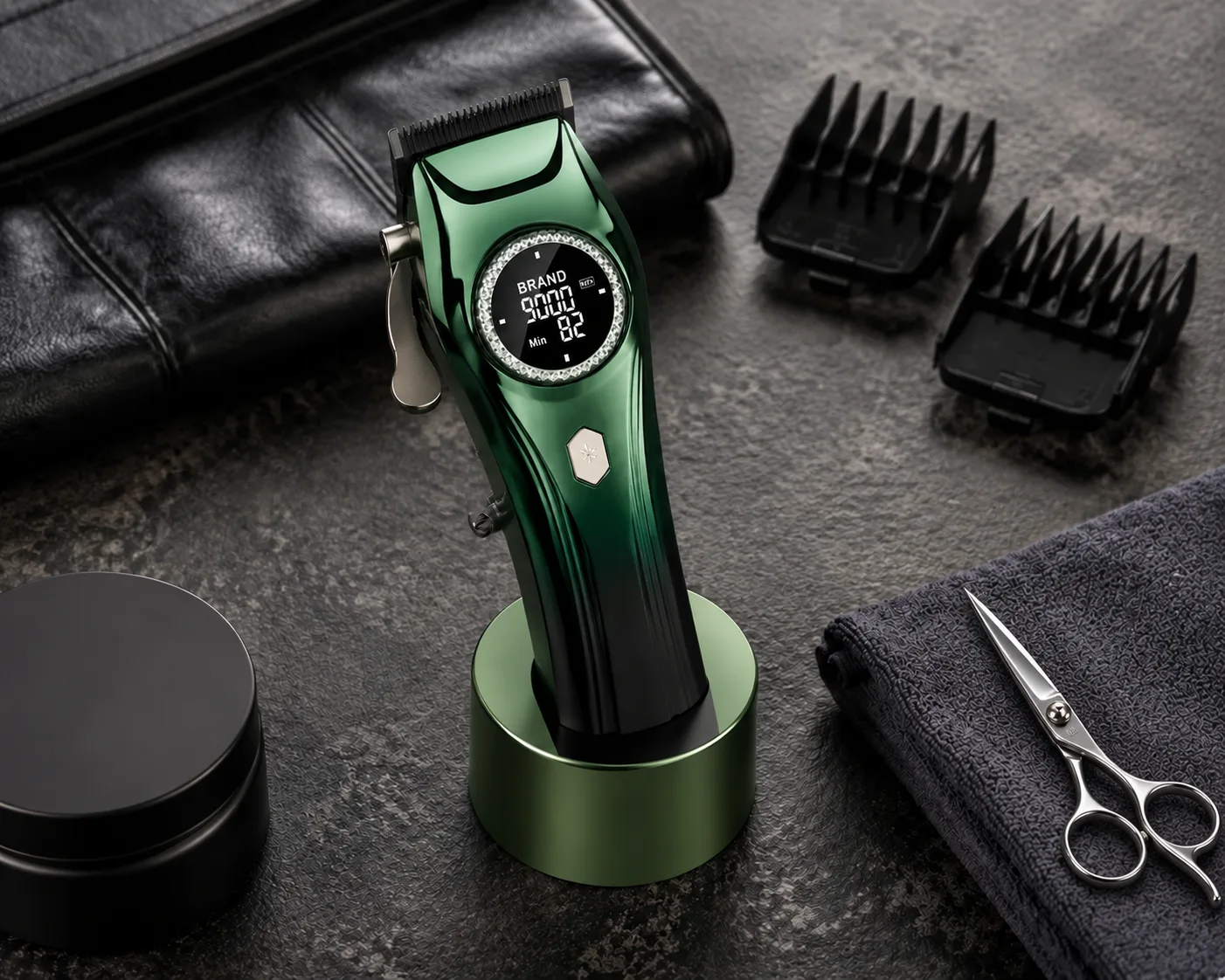
A current product gives the battery discussion a practical reference without turning it into a specification sheet. The U-857 professional hair clipper from Oucai combines a 9000 RPM motor with a 4500mAh lithium-ion battery. It offers up to 300 minutes of continuous use and charges by USB in about four hours. The model also comes with one year of after-sales support, including free spare parts and return or replacement service.
For B2B buyers, these specifications position the U-857 as a professional cordless platform where extended operating time can be valuable. Longer runtime can reduce charging interruptions during busy barber sessions, while battery capacity still needs to be considered alongside product weight, charging time, target price, and intended workload.
Where the U-857 Fits in an OEM Battery Strategy
The U-857 provides a practical starting configuration for buyers developing professional OEM hair clippers. Its runtime and motor configuration can first be assessed against the intended user, working environment, and market position.
If a new project also includes specific battery-replacement requirements, the sourcing brief can then define battery access, compatible replacement supply, after-sales strategy, housing requirements, and destination-market needs.
This keeps the product-development process in the right order: select a platform that suits the commercial application first, then identify which custom engineering requirements belong in the project before final sampling. It is a more reliable approach than choosing a clipper around one headline battery or motor figure.
Which Design Trade-Offs Matter for Replaceable Battery Hair Clippers?
Battery serviceability can affect the enclosure, fasteners, sealing, assembly, instructions, testing, and tooling. When battery access is designed into the product from the beginning, those elements can be developed together. The same change made after housing approval may reopen several of them. For sourcing teams, this is closer to a total cost of ownership decision than a simple comparison of unit prices.
Battery Access vs. Water Resistance
Article 11 contains a derogation for certain appliances designed primarily to operate in environments regularly exposed to splashing water, water streams, or immersion and intended to be washable or rinseable. In qualifying cases, battery replacement may be limited to independent professionals when that arrangement is necessary for user and appliance safety.
This is not a general exemption for every washable hair clipper.
Where water resistance forms part of an OEM specification, intended use, sealing, battery access, and the applicable regulatory conditions need to be reviewed together before the housing concept is fixed.
Repairability vs. Tooling and After-Sales Cost
A more serviceable battery design may require different fasteners, housing revisions, instructions, or tooling. The scale of the change depends on the starting platform and requested access method.
A sealed design creates a different commercial trade-off. If battery degradation later leads to replacement of the complete appliance, part of the cost moves into warranty and after-sales handling.
Unit price tells only part of the story. Development work, replacement-battery inventory, warranty handling, and expected SKU life belong in the same calculation.
How to Compare a Hair Clipper Manufacturer for a 2027 Product Line
Once the battery architecture is defined, supplier comparison becomes an execution question. Buyers need to establish what already fits an existing platform, what requires development, and what may affect tooling, testing, samples, or launch timing. For private-label projects, Oucai supports branding, color options, packaging, and product configuration through its OEM/ODM clipper projects.
Ask for a Battery Plan, Not Just a Price
A useful supplier discussion covers target runtime, charging method, battery-access strategy, housing implications, replacement-battery supply, sample requirements, and after-sales responsibility.
Article 11 places the relevant obligation on the natural or legal person that places the product incorporating the portable battery on the market. That party is not automatically the physical clipper factory.
For a private-label program, the commercial agreement still needs to define how replacement batteries will be identified, ordered, and kept compatible over the life of the SKU. Two OEM hair clippers quotations are much easier to compare when those responsibilities are clear.
Freeze the Battery Architecture Before Mass Production
A late battery-access change may alter the internal layout, instructions, artwork, or packaging as well as the housing itself. Freeze the battery architecture before final sample approval and treat later changes as controlled revisions.
For private label hair clippers and repeat wholesale hair clippers, a fixed approved configuration gives purchasing, production, and inspection teams a clear reference. It also reduces avoidable disputes over what was actually approved for bulk production.
Conclusion
Replaceable batteries are becoming a product-development issue rather than a battery specification alone. The February 2027 Article 11 date gives EU-bound projects a clear reason to review battery architecture now, while the broader right-to-repair and repairability discussion keeps product life and spare-parts access relevant beyond one launch cycle.
A strong sourcing decision connects runtime with battery access, tooling, target market, after-sales cost, and expected SKU life. For a new professional clipper program, send Oucai the target markets, expected quantity, runtime requirement, battery strategy, water-resistance requirement, branding needs, sample expectations, and launch timing when you contact Oucai.
That brief creates a practical basis for deciding whether an existing platform fits or whether battery-access and housing changes need evaluation before sampling, followed by a relevant sample plan and OEM bulk quotation.
FAQs
Q1: Will every cordless hair clipper sold in the EU need a user-replaceable battery from February 2027?
A: Not automatically. Article 11 sets a general requirement for products within its scope that incorporate portable batteries, but defined derogations exist. Product construction, intended use, and safety conditions affect how the rule applies.
Q2: How long must replacement batteries remain available under Article 11?
A: Relevant batteries must remain available as spare parts for at least five years after the last unit of the equipment model is placed on the market, at a reasonable and non-discriminatory price.
Q3: Can a replaceable battery design increase OEM development or tooling cost?
A: It can. The impact depends on the existing architecture. Battery-access changes may affect housing, fasteners, sealing, testing, instructions, or tooling, so the access method is best settled before final sample approval.
Q4: What belongs in a hair clipper manufacturer RFQ for a 2027 project?
A: Include target markets, expected quantity, runtime and charging requirements, battery-access strategy, replacement-battery expectations, housing or water-resistance requirements, branding, packaging, target price range, sample requirements, and planned launch timing.