Buyers can approve the shape, target price, and packaging direction of a hair dryer brush fairly quickly. The electrical version is where the project often gets more complicated.
That became very visible in August 2026, when the U.S. CPSC warned about several one-step hair dryer brushes sold through Walmart.com and TikTok Shop. The affected products lacked integral immersion protection and posed shock and electrocution hazards.
For importers, the point is bigger than one warning or one market. Product safety now sits alongside price, styling functions, packaging, and delivery timing in the sourcing decision. A product can look ready for retail and still create trouble if the exact SKU is not matched to the destination market.
For buyers comparing suppliers, Oucai offers a dedicated hair dryer brush range for overseas B2B sourcing. Before looking at individual models or quotations, it makes sense to start with the first question that can affect the entire purchase: how product safety changes the sourcing decision.
Why Hair Dryer Brush Safety Is a Purchasing Issue
A safety problem rarely stays inside the technical department. It can delay a launch, trigger extra inspections, increase return costs, affect marketplace listings, or leave a distributor with stock that cannot be sold as planned. That changes how a hair dryer brush supplier needs to be evaluated. Price and appearance still matter, but they sit inside a much larger commercial decision.
What the 2026 CPSC Hair Dryer Brush Warning Means for Buyers
The 2026 CPSC warning involved one-step hot air brushes with three speed and three temperature settings. The issue was not the styling format itself. The affected products lacked the immersion protection required under applicable U.S. hair dryer rules.
That distinction matters for importers.
A product may already be selling online and still be the wrong version for another market or channel. Marketplace presence does not replace SKU-level verification.
For hand-supported hair dryers covered by U.S. requirements, integral immersion protection reduces electric-shock risk if the appliance contacts water. CPSC treats products without the required protection as a substantial product hazard.
Product safety has therefore become part of supplier evaluation, especially for electrical styling appliances sold through major retail and marketplace channels.
What Costs Matter Beyond Unit Price?
A low quotation can become expensive later.
Repacking, rework, replacement stock, extra inspection, delayed launches, customer returns, or unsellable inventory can erase a small saving at the quotation stage. In hair dryer brush wholesale, even a minor issue becomes costly when it affects hundreds or thousands of units.
A better comparison looks at the total commercial risk attached to the order rather than only the price per piece.
Once that risk is clear, the next question is whether the product itself fits the intended market and price point.
Define the Product Before Comparing Suppliers
One-step brushes, multi-function stylers, and high-airflow hot air tools often appear under similar search terms, but they do not serve the same retail position. Before sending an RFQ, define the intended customer, target price, sales channel, destination market, and functions that actually support the offer. This keeps the specification tied to the business case instead of turning the project into a feature contest.
One-Step Hair Dryer Brush or Multi-Function Styler?
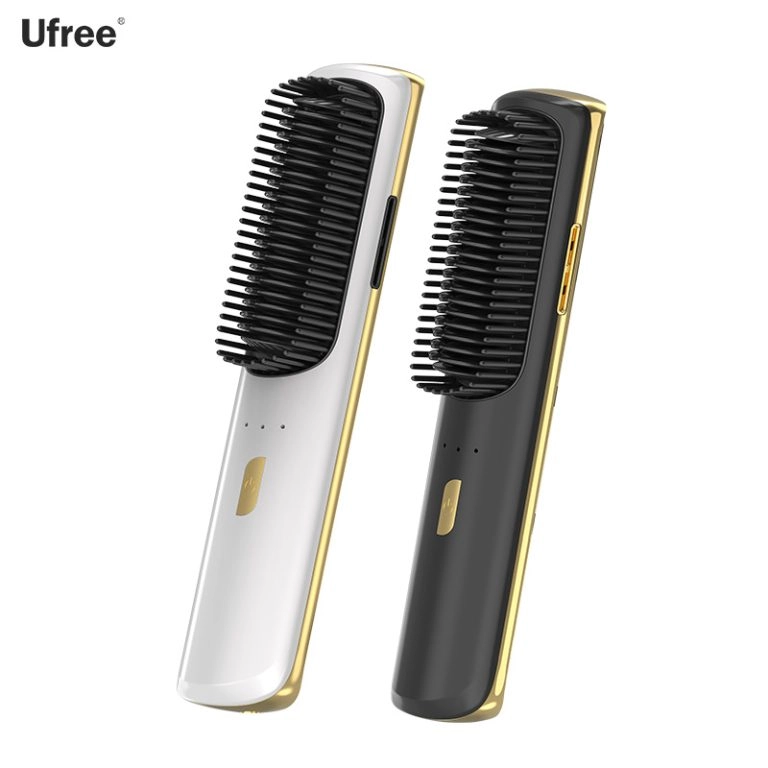
A one step hair dryer brush gives retailers a simple message: dry and style with one handheld tool.
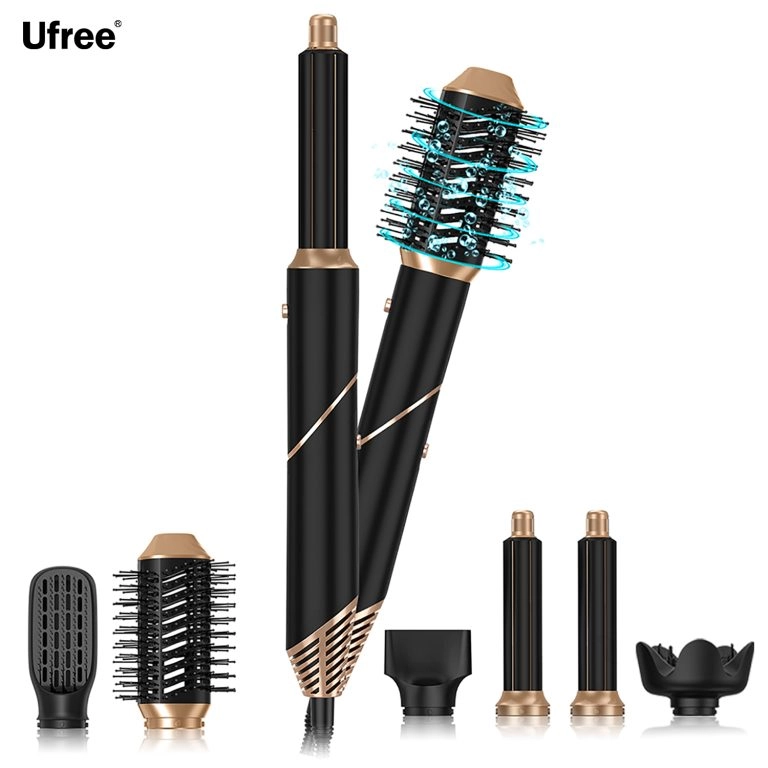
A multi-function system can support a higher perceived value because the customer gets more styling options. There is a trade-off, though. Extra attachments take up more packaging space, add more parts to inspect, and create more opportunities for accessories to be missing or damaged.
For a value-focused retail line, those extras may add cost without improving sell-through. In a higher-priced beauty program, they may help justify the retail price.
More functions are useful only when the target customer values them.
Which Electrical Specifications Actually Matter?
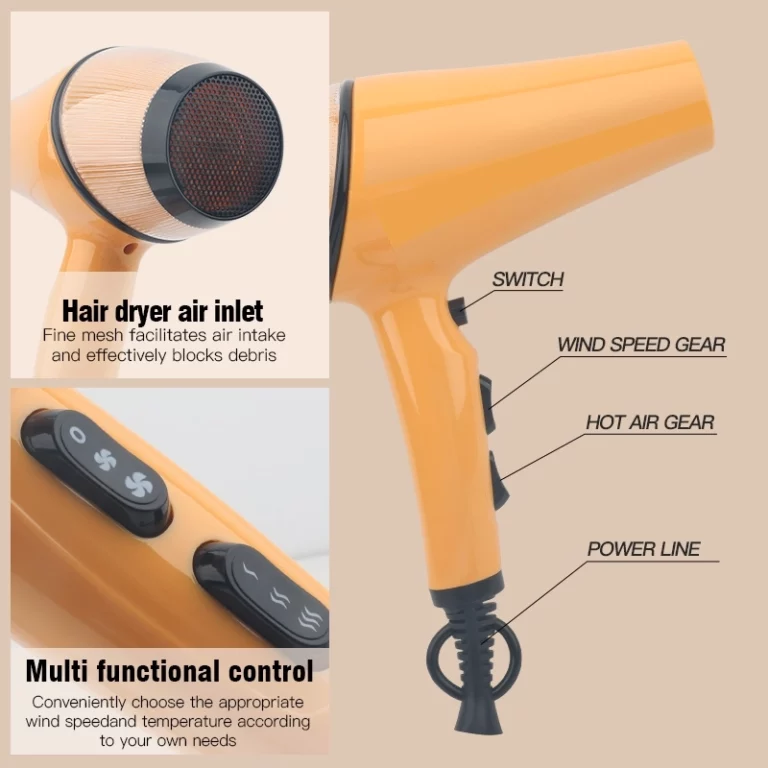
Voltage, frequency, rated power, airflow, heat settings, and cord configuration all influence product fit, but none tells the full story on its own.
The Oucai U-8226 One Step Hair Dryer Brush is rated at 110/220V, 50/60Hz, and 800/1000W. It has three heat levels—50°C, 78°C, and 105°C—along with 12 m/s airflow and a 2-meter power cord.
These figures help a buyer compare models without turning the decision into a numbers race. Multiple heat levels provide more styling control, while the listed voltage range gives buyers a starting point for discussing different market versions.
Higher wattage or stronger airflow is not automatically a better purchase. The useful specification is the one that fits the customer, channel, price point, and local electrical requirements.
Once the basic specification fits the project, the next step is confirming that the exact production version can actually be ordered and sold in the intended market.
What to Verify Before a Bulk Order
This is where an RFQ becomes a real purchasing project. The approved sample, specification sheet, electrical version, packaging, accessories, and supporting documents all need to refer to the same SKU. Small mismatches are usually manageable before mass production. The same mistake becomes much harder to fix once finished goods are packed or already in transit.
Match Compliance Documents to the Exact SKU
A certificate or test document connected to a company does not automatically cover every model.
For an OEM hair dryer brush or another electrical styling appliance, confirm which documents apply to the exact SKU, voltage version, and destination market.
Regulatory terminology also needs care. Under CPSC guidance for hand-supported hair dryers, the 15(j) rule does not itself create a Section 14(a) testing or certification requirement, even though a product without the specified immersion protection can still be treated as a substantial product hazard.
That is why phrases such as “CPSC compliant” and “UL certified” cannot simply be used as substitutes for one another.
Keep the Approved Sample Tied to the PO
The production order needs a clear reference point.
At Oucai, a pre-production sample is used before mass production, followed by final inspection before shipment.
That gives both sides two practical checkpoints: one before full production starts and another before the order leaves.
For a larger hair dryer brush wholesale program, the final PO can tie the approved sample to the electrical version, accessories, packaging, quantity, and inspection terms. This reduces the risk of approving one configuration and receiving another in bulk.
How to Compare Hair Dryer Brush Suppliers
With product fit and basic compliance covered, supplier comparison becomes much more useful. The question is no longer which catalog looks better. It becomes whether the supplier can repeat the approved version, quote the same commercial scope, communicate realistic timing, and deal with problems after shipment. A hair dryer brush manufacturer or supplier can look inexpensive on paper and still create a higher total cost.
Compare Quotations on the Same Basis
Two quotes only make sense side by side when they cover the same order.
Before comparing unit prices, match:
- SKU and electrical configuration
- Attachment set and accessories
- Retail packaging and master carton
- Inspection scope
- Warranty responsibility
- Incoterm and shipping basis
A lower quote may simply include less.
This is a small detail in an RFQ, but it prevents a common sourcing mistake: comparing two prices for two different commercial packages.
Confirm MOQ, Lead Time, and Customization Early
MOQ and lead time can change with the model and project requirements, so both need to be confirmed for the exact SKU during the RFQ stage.
Private-label projects add another layer. Branding, packaging, plug configuration, or other requested changes need model-by-model confirmation, together with any effect on sampling, MOQ, production timing, and documentation.
Building a launch calendar around an unconfirmed production date creates unnecessary pressure later.
A supplier can meet the technical brief and still be the wrong commercial fit if packaging, freight efficiency, or after-sales terms make the program difficult to manage.
Factor Logistics and After-Sales Into the Sourcing Decision
The sourcing calculation does not stop when the technical specification and quotation look acceptable. Packaging affects freight and warehouse use. After-sales terms affect what happens when defects, operating questions, or replacement needs appear after the product reaches the market. These details are less visible than wattage or attachments, but they can have a larger effect on repeat orders and distributor margin.
How Packaging Changes the Real Cost
The Oucai U-8227 6-in-1 Hair Dryer Brush is rated at 110/220V, 50/60Hz, and 800/1000W, with 13.7 m/s airflow. It is packed 12 pieces per carton, compared with 18 pieces per carton for the U-8226.
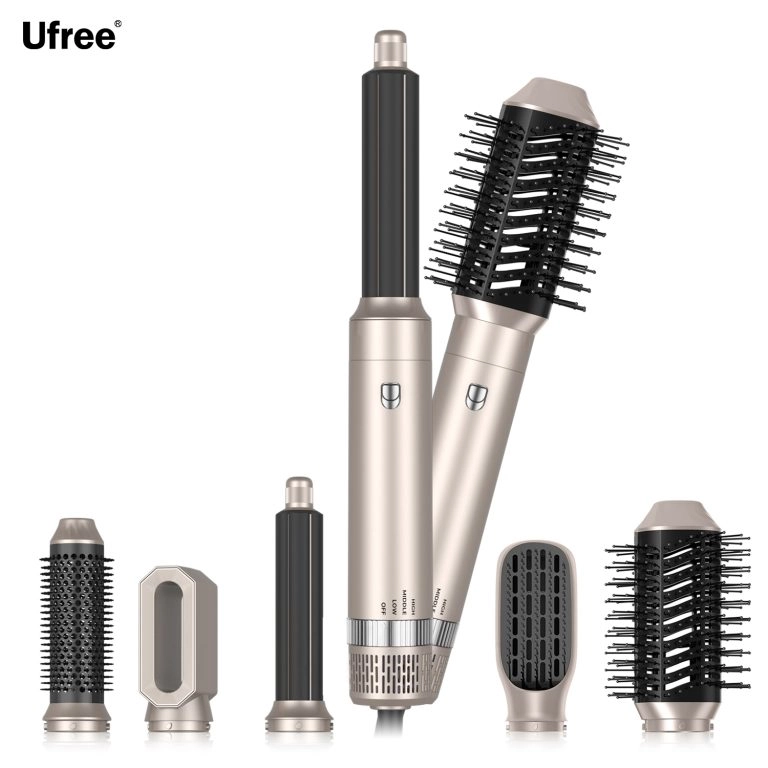
At volume, that carton difference affects freight planning, warehouse space, and mixed-order calculations.
Two models with similar electrical ratings can therefore produce different landed-cost results. Packaging belongs in the commercial comparison, not as an afterthought.
What After-Sales Support Matters to Distributors?
Electrical appliances sometimes need troubleshooting, repair, replacement parts, or warranty handling after sale.
Oucai provides repair or replacement for manufacturing defects within the applicable warranty period, repair service for out-of-warranty products, original replacement parts, and technical support. Warranty periods vary by product.
For a distributor, that gives more than one option when a problem appears instead of treating every defect as a write-off.
The exact warranty, repair, and replacement terms still need to be agreed for the selected SKU before the PO is finalized.
Conclusion
For a buyer, the real test is whether the selected model fits the target market and whether the same approved specification can be carried through to bulk production. Price still matters, but so do packaging, inspection, freight efficiency, delivery timing, and the way after-sales issues are handled.
That is what makes supplier comparison more useful than simply comparing feature lists or unit prices.
If you are comparing a hair dryer brush supplier, contact Oucai to request a sample and quotation. Share your target market, estimated quantity, electrical requirements, packaging needs, and planned launch schedule so the discussion can start with a suitable model and a clear project scope.
FAQs
Q1: What should importers check before sourcing a hair dryer brush?
A: Start with the market, electrical version, safety requirements, packaging, and approved sample. The exact SKU matters more than the general product category.
Q2: What documents do I need before a hair dryer brush wholesale order?
A: Ask for the documents that apply to the exact model and voltage version, including the relevant specifications, test or certification documents, labels, and manual.
Q3: Can I order a private label hair dryer brush for different markets?
A: It depends on the model. Branding and packaging may be straightforward, while electrical changes, plug versions, MOQ, and lead time need to be discussed for the specific project.
Q4: What needs to be confirmed before mass production?
A: Get the approved sample, final specification, electrical version, accessories, packaging, quantity, inspection terms, and delivery schedule in writing.
Q5: How do I compare hair dryer brush wholesale suppliers?
A: Compare the same commercial scope: SKU, electrical version, accessories, packaging, inspection, lead time, warranty, Incoterm, and unit price. The lowest quote is not always the lowest-cost option.